Transport & Logistics

Transport & Logistics

The transport and logistics business is experiencing increasing competitive pressures and shifting regulation. The importance of environmental impacts and requirements is increasing in all forms of transport. Rail traffic is being opened to competition. Digitalisation is affected every facet of the transport and logistics sector.

Change brings new challenges, but also new opportunities. These challenges and opportunities can equally involve day-to-day decision making as well as long-term solutions, such as fleet procurement. We can provide your company with comprehensive, top-shelf legal services in this global and complex business.


Latest references

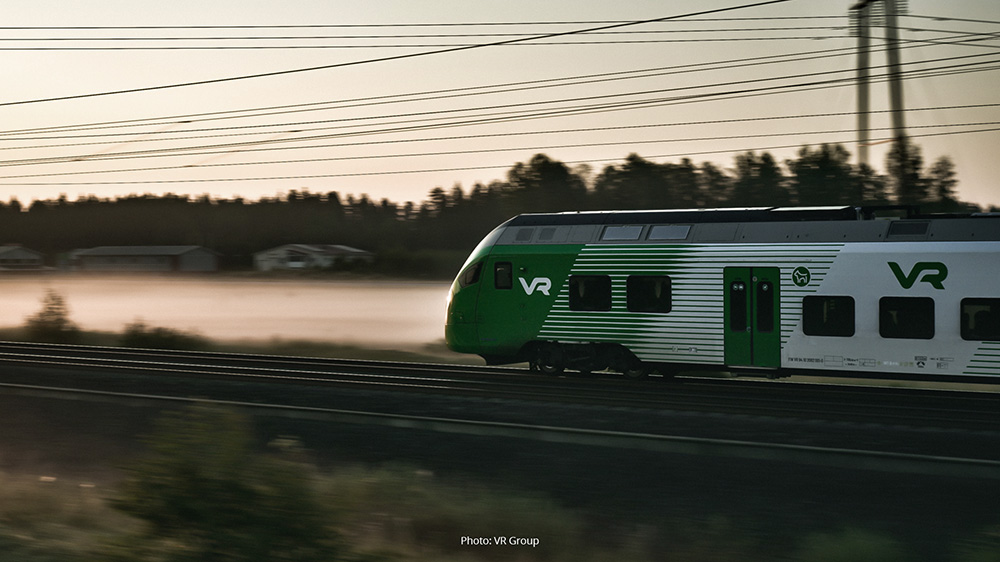
We successfully represented VR Group before the Supreme Court in a case concerning the meal break practice of commuter train drivers. On 6 February 2026, the Supreme Court ruled in VR’s favour (decision KKO:2026:12), confirming that VR had the right to amend the commuter train drivers’ meal break practice in 2021 by rendering the break unpaid in accordance with the applicable collective agreement. This decision clarifies the interpretation of collective agreements and employment legislation as well as the limits of the employer’s right to direct work. Over 250 commuter train drivers challenged the unpaid meal break practice which VR introduced in April 2021. Before the change, meal breaks had a long history of being paid. The change was based on the train drivers’ collective agreement, which allows for meal breaks to be organised either as paid or unpaid time. The Supreme Court ruled that the scheduling and managing of breaks falls within the core area of the employer’s right to direct work. This increases the threshold for an established practice becoming a binding condition for the parties. Merely following a practice consistently and over a long period of time does not make the practice binding; instead, the employer’s intent to commit to the practice must be clearly evident from the employer’s conduct or other circumstances. As both alternatives – paid and unpaid – for organising meal breaks had been retained in the collective agreement despite other amendments over the years, it could not be considered that VR had intended to commit to the paid break practice and waive its right to direct work as regards break scheduling. It was also significant that the employment contracts explicitly referred only to the collective agreement as regards working time. The Supreme Court deemed that the employees’ paid meal break was not an established term of employment and that VR was entitled to change the practice based on the collective agreement. The employer had the right, by virtue of its right to direct work, to unilaterally change the meal break practice by choosing to apply the other arrangement permitted by the collective agreement.
Case published 3.3.2026
We are acting as legal adviser to Stena Line on its acquisition of NLC Ferry Ab Oy (Wasaline), strengthening Stena Line’s position in the Baltic Sea and enabling it to take over operations of the ferry route between Umeå in Sweden and Vaasa in Finland. The acquisition further strengthens Stena Line’s position as one of the leaders in sustainability within the ferry industry and enhances the company’s access to alternative fuels whilst providing a strong intermodal transport link towards Gothenburg and Trelleborg, and onwards to the European continent. NLC Ferry, operating under the auxiliary name Wasaline, were owned by Kvarken Link, a company jointly owned 50/50 by the cities of Umeå and Vaasa. Wasaline is the world’s northernmost shipping company, operating daily passenger and freight services between Vaasa, Finland and Umeå, Sweden, and is the first carbon-neutral ferry operator in the Baltic Sea with its hybrid vessel, Aurora Botnia, which runs on biogas and batteries. Stena Line is one of Europe’s leading ferry operators, with 20 routes across the continent. The company is family-owned, was founded in 1962 and is headquartered in Gothenburg, with 6,550 employees and an annual turnover of 19.6 billion SEK. The transaction is conditional to the approval of the respective municipal councils of Umeå and Vaasa as well as customary closing conditions such as authority approvals. The completion of the transaction is expected to take place in the beginning of the year 2026. Castrén & Snellman is collaborating with CMS Wistrand, Stena Line’s advisor on Swedish law matters in connection with the transaction.
Case published 4.11.2025
We advised Aker Arctic Technology Inc, a company specialised in icebreaker design, in its acquisition of Bluetech Finland Ltd. Under the signed agreement, Aker Arctic and Bluetech transferred to the ownership of Arctic Marine Technology Group Oy, an entity established for the purpose of owning the companies. Arctic Marine Technology Group is owned by Finnish Industry Investment (Tesi) and ABB, the current shareholders of Aker Arctic. The completion of the transaction required the approval of the Finnish Ministry of Economic Affairs and Employment and the fulfilment of other customary closing conditions. Aker Arctic Technology Inc is a private company specialising in the technology development, design, engineering, special products, consulting and testing services for ice-going vessels and icebreakers. Bluetech Finland Ltd specialises in cruise, ro-pax and cargo ship design, offering engineering services for ship owners, shipyards and marine suppliers.
Case published 26.6.2025
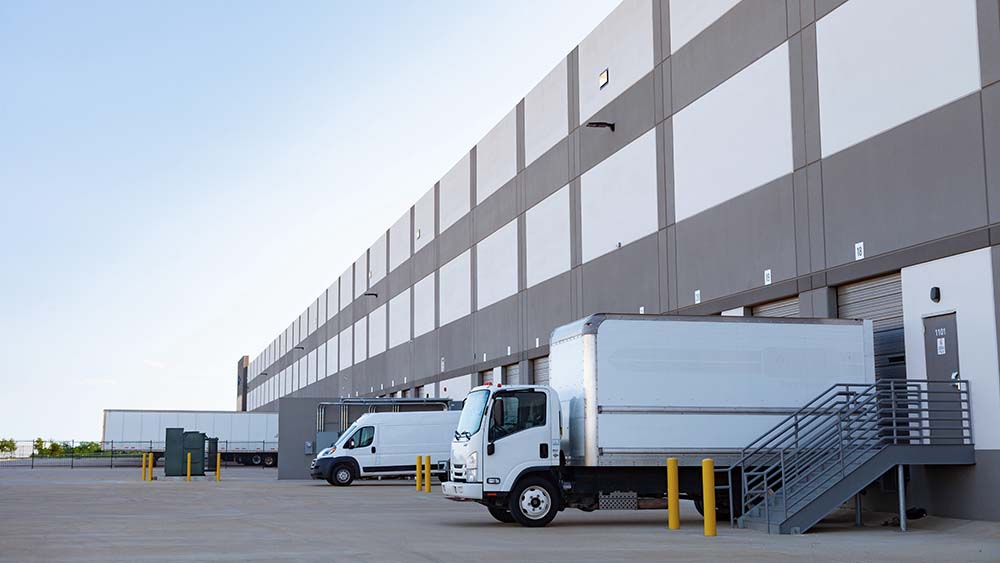
We advised OP Corporate Bank plc in a real estate financing arrangement relating to DHL Express logistics centre under construction near Helsinki Airport. In the arrangement Nrep (acting on behalf of NSF III Fund) and Pontos Group acquired Finavia’s stake of DHL Express logistics centre under construction. LEED Platinum certification will be applied for the project, and as a result of the certification, the facility is contemplated to qualify as a green loan after the construction completion date.
Case published 12.3.2025