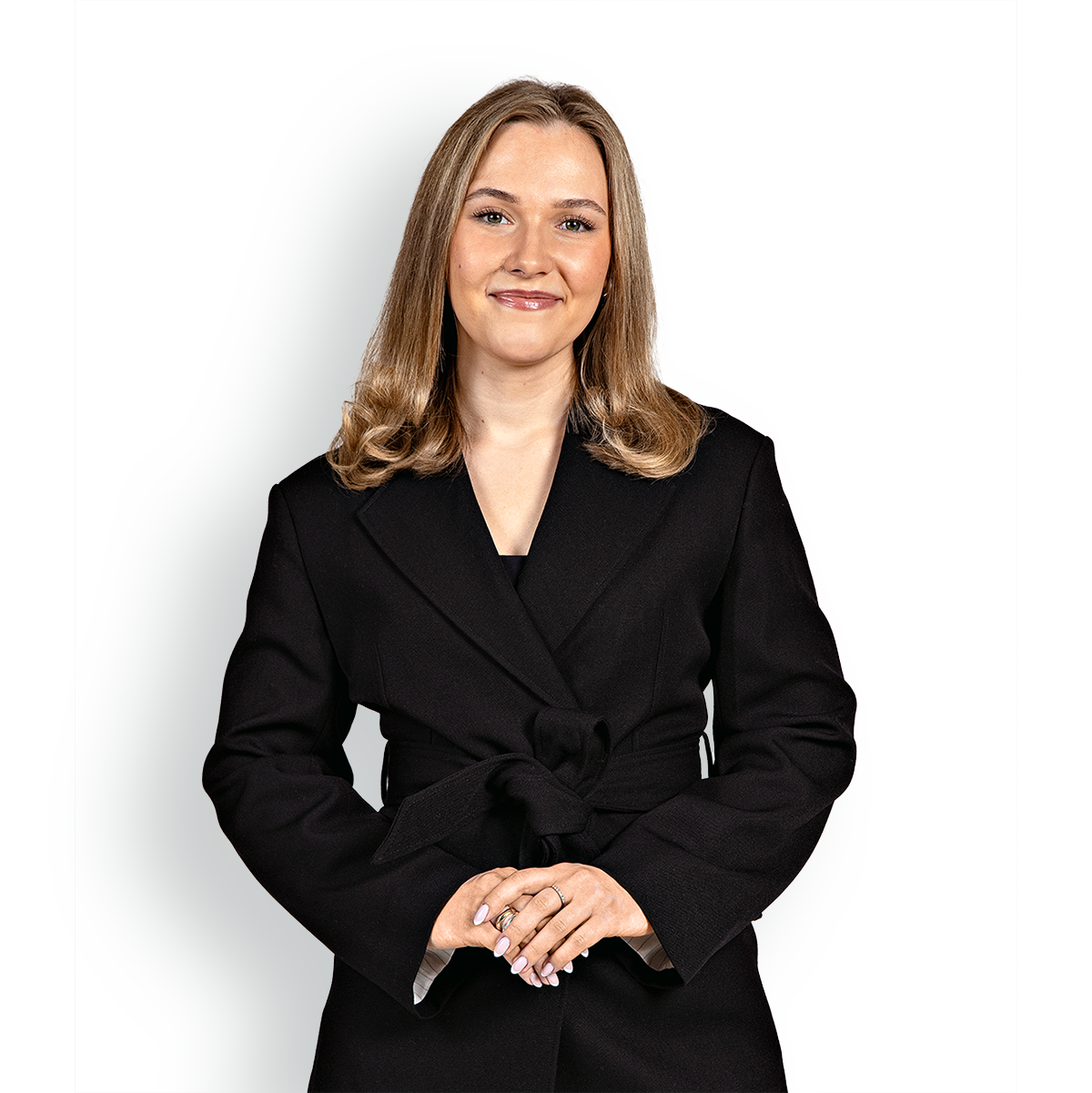
Ilona Karppinen

Partner, Member of the Finnish Bar

I specialise in dispute resolution and general corporate law. I advise our clients in major commercial disputes ranging across a variety of different business sectors, for example, the energy sector. In addition, I have successfully handled disputes related to private enforcement of competition law, mergers and acquisitions, corporate liabilities, outsourcing and the procurement of data systems.

I assist our clients in managing their commercial disputes in domestic and international proceedings. I act as counsel in settlement negotiations, mediation, litigation, arbitration and authority investigations. I also act as an arbitrator in resolving commercial disputes.

In the field of corporate law, I advise clients in legal matters related to corporate structuring, corporate governance and directors` liability.

Our clients value my analytical and strategical approach. I strive to find innovative and business-driven solutions to our clients’ challenges. The Legal 500 and Euromoney Legal Media Group have ranked me as a Rising Star in Dispute Resolution.

I am actively involved in the world`s largest lawyers` professional organisation, the International Bar Association, where I have held various officer positions in the IBA Litigation Committee. I was also a member of the working group that modernised the Arbitration Rules of the Finland Chamber of Commerce, in force as of 1 January 2020. In addition, I have published a number of articles in international professional publications regarding private enforcement of competition law, investment disputes, cost-efficiency in arbitration and the effects of the financial crisis on Finnish corporate governance.


Latest references

We successfully represented VR Group before the Supreme Court in a case concerning the meal break practice of commuter train drivers. On 6 February 2026, the Supreme Court ruled in VR’s favour (decision KKO:2026:12), confirming that VR had the right to amend the commuter train drivers’ meal break practice in 2021 by rendering the break unpaid in accordance with the applicable collective agreement. This decision clarifies the interpretation of collective agreements and employment legislation as well as the limits of the employer’s right to direct work. Over 250 commuter train drivers challenged the unpaid meal break practice which VR introduced in April 2021. Before the change, meal breaks had a long history of being paid. The change was based on the train drivers’ collective agreement, which allows for meal breaks to be organised either as paid or unpaid time. The Supreme Court ruled that the scheduling and managing of breaks falls within the core area of the employer’s right to direct work. This increases the threshold for an established practice becoming a binding condition for the parties. Merely following a practice consistently and over a long period of time does not make the practice binding; instead, the employer’s intent to commit to the practice must be clearly evident from the employer’s conduct or other circumstances. As both alternatives – paid and unpaid – for organising meal breaks had been retained in the collective agreement despite other amendments over the years, it could not be considered that VR had intended to commit to the paid break practice and waive its right to direct work as regards break scheduling. It was also significant that the employment contracts explicitly referred only to the collective agreement as regards working time. The Supreme Court deemed that the employees’ paid meal break was not an established term of employment and that VR was entitled to change the practice based on the collective agreement. The employer had the right, by virtue of its right to direct work, to unilaterally change the meal break practice by choosing to apply the other arrangement permitted by the collective agreement.
Case published 3.3.2026
We advised Peptonic Medical AB (publ), a Swedish medical development company, in the acquisition of a majority stake in Lune Group Oy Ltd, a Finnish company that sells the Lunette menstrual cup. The acquisition allows Peptonic to grow and expand its product portfolio by enabling the merger of two strong women’s health and selfcare brands with several synergies. In addition, the acquisition gives Peptonic access to a global distribution network that is already up and running, including in the United States. Peptonic is listed on the Spotlight Stock Market in Stockholm, Sweden. Lune Group was founded in 2005 by CEO Heli Kurjanen and has earned its place as a top global menstrual cup company through its continued focus on quality, safety, sustainability and inclusivity. Lune Group Oy Ltd has a subsidiary in North America. The completion of the acquisition is subject to certain customary conditions and is expected to occur during June 2020.
Case published 18.5.2020
The Finnish Supreme Court rendered a decision on 29 January 2019 in which it dismissed Metsähallitus’ application for leave to appeal in an antitrust damages trial where Metsähallitus claimed damages from Stora Enso Oyj, UPM-Kymmene Oyj and Metsäliitto Cooperative based on a competition infringement on the Finnish roundwood market. The Supreme Court’s decision means that the case has been finally resolved. The forestry companies are not obligated to pay Metsähallitus damages due to the competition infringement. Metsähallitus originally claimed damages amounting to nearly 283 million euros jointly and severally from the forestry companies due to the alleged undercharge paid by the forestry companies for roundwood during 1997–2005. The Helsinki District Court dismissed Metsähallitus’ claim in its judgment of 22 June 2016 and ordered Metsähallitus to compensate the forestry companies’ legal costs in full. Metsähallitus appealed the District Court’s judgement to the Helsinki Court of Appeal, which rendered its judgment on 21 May 2018. The Court of Appeal did not change the District Court’s judgment, dismissed Metsähallitus’ appeal and ordered Metsähallitus to compensate the forestry companies’ legal costs also in the Court of Appeal in full. With the Supreme Court’s decision, the Court of Appeal’s judgement is now final. The Helsinki District Court dismissed damages claims by a group of Finnish private forest owners and a group of Finnish municipalities against the forestry companies in relation to the same competition restriction in its judgements of 2017. These judgements have gained legal force. Castrén & Snellman successfully represented Stora Enso in every stage of the trials.   This is the largest antitrust damages case ever tried in Finland. Read more about the earlier stages of the case.
Case published 30.1.2019
We successfully represented Stora Enso Oyj in an extensive antitrust damages trial in which Metsähallitus claimed a capital amount of nearly 125 million euros in damages jointly and severally from Finnish forestry companies Stora Enso, UPM-Kymmene Oyj and Metsäliitto Cooperative based on the forestry companies allegedly having purchased roundwood from Metsähallitus below market prices in 1997–2005. The Helsinki District Court dismissed Metsähallitus’ claim in its entirety on 22 June 2016 and ordered Metsähallitus to compensate the forestry companies’ legal costs in full. Metsähallitus appealed the District Court’s decision to the Helsinki Court of Appeal, which upheld the District Court’s decision. Metsähallitus filed its claim against the forestry companies in March of 2011, so this exceptionally extensive case took over seven years before the Court of Appeal rendered its judgment. Outset In its final decision from 2009, the Market Court found that Stora Enso, UPM-Kymmene and Metsäliitto Cooperative had exchanged information on the Finnish roundwood market during 1997–2004 in a manner prohibited by the Competition Restrictions Act. In its follow-on damages claim, Metsähallitus alleged that the forestry companies had purchased roundwood from Metsähallitus below market prices during and after the competition infringement found by the Market Court. Helsinki District Court dismissed Metsähallitus’ claim by a unanimous decision on 22 June 2016 and ordered Metsähallitus to compensate the forestry companies’ legal costs of 8.5 million euros from hearing the case in the District Court in full. Metsähallitus appealed the District Court’s decision to the Helsinki Court of Appeal. In the Court of Appeal, Metsähallitus primarily claimed a capital amount of nearly 125 million euros in damages jointly and severally from the forestry companies for the roundwood purchases allegedly made from Metsähallitus below market prices. Metsähallitus’ secondary claims were separate based on the roundwood transactions it had made with each defendant company. The secondary claim against Stora Enso amounted to approximately 68 million euros, which covered over half of the total amount claimed by Metsähallitus. In addition to the capital amounts of the damages claim, Metsähallitus claimed profit and penalty interest, which increased the amount of Metsähallitus’ overall claim significantly. During the trial, Metsähallitus had reduced its claims substantially. The initial amount claimed jointly and severally by Metsähallitus at the District Court totalled nearly 283 million euros. However, during the District Court proceedings, Metsähallitus specified its claims and jointly and severally claimed a total amount of approximately 159 million euros. At the Court of Appeal, Metsähallitus further reduced its claims by approximately 34 million euros, since this amount of the claims was found to be statute barred based on Supreme Court ruling KKO 2016:11. This Supreme Court’s preliminary ruling concerning the statute of limitation of compensation debt was issued in another trial concerning the same competition infringement. We also successfully represented Stora Enso in this trial. Results The Helsinki Court of Appeal rendered its judgment in the matter on 21 May 2018. The Court of Appeal upheld the District Court’s decision and dismissed Metsähallitus’ appeal and claim. The Court of Appeal also obligated Metsähallitus to compensate the forestry companies’ legal costs from hearing the case in the Court of Appeal in full. The forestry companies’ legal costs in the Court of Appeal were approximately 4 million euros in total. The Court of Appeal was presented essentially with the same evidence as the District Court. The evidence on the alleged harm from the competition infringement was very extensive and consisted of both factual evidence as well as a considerable amount of expert evidence regarding the roundwood market and economic analyses. The Court of Appeal accepted the position taken by Stora Enso and the other forestry companies and unanimously dismissed Metsähallitus’ claims. In its judgement, the Court of Appeal evaluated the evidence in detail and for the most part in the same manner as the District Court. Based on the evidence, the Court of Appeal found that Metsähallitus had not produced sufficient evidence to prove that Metsähallitus would have suffered damage in the delivery sales between Metsähallitus and the forestry companies due to the violation of the Act on Competition Restrictions. The damages trial between Metsähallitus and the forestry companies is one of the largest damages cases related to a competition infringement ever tried in Finland.
Case published 1.6.2018
We successfully represented Stora Enso Oyj in an extensive damages trial in which Metsähallitus claimed a capital amount of nearly 160 million euros in damages jointly and severally from Finnish forestry companies Stora Enso, UPM-Kymmene Oyj and Metsäliitto Cooperative based on the forestry companies allegedly having purchased roundwood from Metsähallitus below market prices in 1997–2005. The Helsinki District Court dismissed Metsähallitus’ claim in its entirety on 22 June 2016 and ordered Metsähallitus to compensate the forestry companies’ legal costs in full. Metsähallitus filed its claim against the forestry companies in March of 2011, so this exceptionally large case took over five years in the court of first instance.
Case published 29.6.2016
We delivered two information design workshops for the legal department of the Finnish Centre for Pensions, with participants from both legal and other professional backgrounds. In the sessions, we applied the principles of legal design thinking to the Finnish Centre for Pensions’ field of operation and background materials, also utilising AI as a design tool. The participants found the tailored training highly useful and commended the trainers for their in-depth familiarisation with the Centre’s opinion drafting process and operating environment. As a result of the workshops, our experts proposed a new structural and linguistic model for the legal department of the Finnish Centre for Pensions for drafting opinions and guidelines. The proposal was well received as clear and applicable to the participants’ everyday work. In addition, we presented tailored AI use cases to support experts, allowing for a more efficient AI-assisted way of working. Our experts who delivered the workshops combined their legal expertise with their leading experience in legal design. The participants appreciated this versatile expertise, which enabled a knowledgeable, creative and applied approach to legal writing. ‘C&S created a well-structured training tailored to our needs, providing clear direction for our organisation and concrete takeaways for our experts in their day-to-day work,’ says Mari Kuunvalo, Head Of the Legal Department at the Finnish Centre for Pensions.
Case published 10.4.2026
We advised Aktia Bank Plc on the issuance of an EUR 80 million Additional Tier 1 (AT1) bond. The bond pays a fixed interest rate of 6.75 per cent semi-annually. The bond is perpetual, and Aktia has the right to redeem or repurchase it in accordance with the terms of the bond, subject to certain conditions. The bond was issued on 1 April 2026. In addition, we assisted Aktia in listing the bond on the Nasdaq Helsinki Ltd stock exchange. For the listing, we prepared Finland’s first EU Follow-on prospectus for a bond. The EU Follow-on prospectus was introduced on 5 March 2026 with an update to the Prospectus Regulation (EU) No. 2017/1129. The EU Follow-on prospectus is a new type of prospectus that can be used, among others, by issuers whose securities have been admitted to trading on a regulated market continuously for at least the 18 months preceding the offer to the public or the admission to trading on a regulated market of the new securities. A follow-on prospectus is simpler than a so-called traditional prospectus, and it is intended to avoid repeating information that the issuer has already disclosed. Nordea Bank Abp acts as the sole structuring advisor for the issue of the Notes. Nordea Bank Abp, Danske Bank A/S and ABN Amro Bank N.V. act as the lead managers for the issue of the Notes. 
Case published 7.4.2026
We advised Aurevia Oy, a portfolio company of French private equity sponsor Mérieux Equity Partners, in a strategic reorganisation that involved splitting Aurevia and its parent companies into two independent groups of companies and reorganisation of its existing debt-financing arrangements. Following the reorganisation, the newly formed Aurevia continues as a leading provider of Contract Research Organization (CRO) and Quality Assurance and Regulatory Affairs (QARA) services, while the newly formed Labquality focuses on delivering External Quality Assessment (EQA) services. Aurevia serves operators in the medical devices, in vitro diagnostics and pharmaceutical sectors. Labquality’s customers include clinical laboratories and social and healthcare organisations. The reorganisation positions Aurevia and Labquality to allocate investments more effectively, accelerate growth within their respective customer segments, and respond to evolving market and client needs. The transaction was implemented through multiple parallel demergers and required comprehensive legal and tax structuring across several jurisdictions. Our team supported Aurevia throughout the planning and implementation phases, covering corporate, tax, employment law, and regulatory matters, as well as the optimisation of each group’s financing structure.
Case published 7.4.2026

Get to know our other experts in the field