On Friday, 12 December 2025, the Finnish Parliament approved amendments to the Act on Mined Minerals Tax that will significantly increase the tax burden on mined minerals as of 1 January 2026. The sudden increase in tax costs poses risks to mining companies’ production conditions, investment capacity and international competitive position.
16.12.2025
Parliament approves substantial increases in tax on mined minerals




Tarja Pirinen, Mikko Alakare & Noora Ahonen
The tax burden of the mining sector will increase by tens of millions of euros
The value royalty for metal ores will increase from the current 0.6% to 2.5% of the taxable value of the metal contained in the mined mineral. Similarly, the volume royalty for industrial minerals will increase from EUR 0.20 to EUR 0.60 per tonne of mined ore or industrial mineral. At the same time, mining companies will also see an increase in their energy costs – at the beginning of 2026, the excise duty on electricity paid by mining operators will increase from 0.05 cents/kWh to 2.24 cents/kWh, as decided earlier this autumn.
According to estimates based on the increase in tax revenue, the increase in mined minerals tax would generate an additional EUR 70 million for the state in the tax payment year 2027, whereas the expected additional EUR 11 million from the increase in the excise duty on electricity would already be collected during 2026. As mining companies operate in international markets, they cannot transfer the entire tax burden to their product prices, which means that the additional costs will mainly directly weaken the companies’ profitability and investment opportunities. In addition to the above taxes, mining companies also pay corporate income tax, which is generally levied on companies, as well as real estate tax on their real estate holdings.
The structural model of the tax remains unchanged – but work will start on a new hybrid model
This latest amendment still leaves the key structural problem of the tax unresolved: the tax is determined based on the volume of production, not profit. This means that the tax is levied even when the operation of the mine is not profitable.
The mining industry has proposed a hybrid model where the tax would be based partly on the royalty model and partly on profit. In connection with the adoption of the amendments to the Act on Mined Minerals Tax, Parliament required that the Government start preparing a hybrid model that could be implemented as early as the beginning of 2027.
Other key amendments as of 1 January 2026
As a result of the amendment, the following changes will take effect at the beginning of January 2026:
- As a general rule, no tax will be paid on mining by-products (this is taken into account in the increase in the value royalty for metal ores).
- The tax on industrial minerals will be determined by the time when the mining or extraction of the ore or industrial mineral takes place.
- The price information on which the taxable values are based is provided for in the Annex to the Act.
- Taxation is extended to cover iron and rhodium.
- The state’s share of the mined minerals tax will be 70%, and the share of the municipality where the mine is located will be 30%.
The structural model needs a quick but carefully prepared update
The Act on Mined Minerals Tax is relatively new, as it only entered into force at the beginning of January 2024. It has received widespread criticism from the very beginning. However, the tax turned out to be more profitable for the state than anticipated, and in the Programme of Prime Minister Petteri Orpo’s Government, the Government proposed a further increase to the tax to balance public finances.
Large tax increases are challenging for an industry that is capital-intensive and requires long-term investment. The location-specific nature of the operations also makes the sector particularly vulnerable to changes in the tax system. It is therefore positive that Parliament is calling for rapid action to introduce a new structural model.
Fast-tracking the structural model update is important so that Finland can adopt a tax model that safeguards both the sustainability requirements of the state economy and the competitiveness and investment possibilities of the mining industry.
Our experts in taxation and other regulatory matters concerning the mining industry are happy to assist you with any questions you may have about this amendment or any other issues relating to the sector.



Latest insights
Article published 24.9.2026 – Environment, Energy & Green Transition
Electricity Market Act: Proposed priority procedure to significantly change new electricity network connections in situations of scarce capacity



 Article published 8.5.2026 – Environment, Energy & Green Transition
Reform of Finland’s land use legislation – key takeaways for project developers
Article published 8.5.2026 – Environment, Energy & Green Transition
Reform of Finland’s land use legislation – key takeaways for project developers
 Article published 2.3.2026 – Environment, Energy & Green Transition
Energy security is a matter of investment and competitiveness
Article published 6.2.2026 – Tax & Structuring
Electricity sector Profit Tax Act in conflict with EU law – SAC denied leave to appeal
Article published 2.3.2026 – Environment, Energy & Green Transition
Energy security is a matter of investment and competitiveness
Article published 6.2.2026 – Tax & Structuring
Electricity sector Profit Tax Act in conflict with EU law – SAC denied leave to appeal

Marius af Schultén, Kanerva Sunila, Samuli Tarkiainen, Jonas Holm & Noora Ahonen
Tarja Pirinen, Marius af Schultén & Joel Aartolahti
Samuli Tarkiainen & Marius af Schultén
Janne Juusela & Mikko Alakare
Latest references

Neoen – Sale of data centre
We advised Neoen Renewables Finland Oy, part of the French Neoen Group, in its sale of a data centre project to a consortium consisting of international data centre developers and operators. This marked Neoen’s first data centre development project in Finland. Founded in 2008, Neoen is one of the world’s leading independent renewable energy producers. The company operates in 15 countries. It develops, finances, builds, owns, and operates solar power plants, wind farms, and battery storage systems. Neoen Group is owned by global alternative asset manager Brookfield Corporation.
Case published 17.9.2026
Lenders and Export Credit Agencies – EUR 514.4 million green project financing for Easpring Finland New Materials’ CAM plant
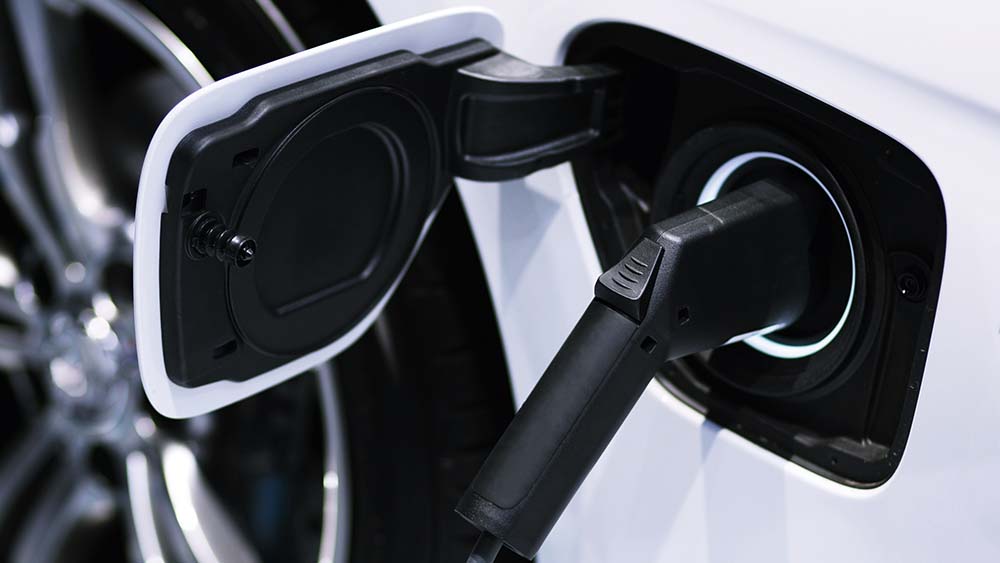
We acted as Finnish law legal adviser to the lenders and the export credit agencies in connection with the EUR 514.4 million green project financing for the development and construction of Easpring Finland New Materials Oy’s cathode active material (CAM) manufacturing plant in Kotka, Finland. The borrower, Easpring Finland New Materials Oy, is a joint venture owned by Beijing Easpring Material Technology, Finnish Minerals Group and LG Energy Solution. The financing was provided by six international commercial banks, with Société Générale acting as financial adviser and mandated lead arranger together with Natixis as co-mandated lead arranger, and DNB, ICBC, ING and Standard Chartered participating as lenders, with support from the export credit agencies Finnvera and Sinosure. The project represents a significant milestone for Finland and the European battery value chain by strengthening Europe’s domestic supply of cathode active materials, a key component in lithium-ion batteries for electric vehicles and energy storage applications. Once the first phase of the project is operational, the Kotka facility is expected to produce approximately 60,000 tonnes of cathode active material annually, making it one of the largest CAM production plants in Europe and supplying leading battery manufacturers across Europe.
Case published 21.7.2026
Delta Capacity – Acquisition of BESS Project
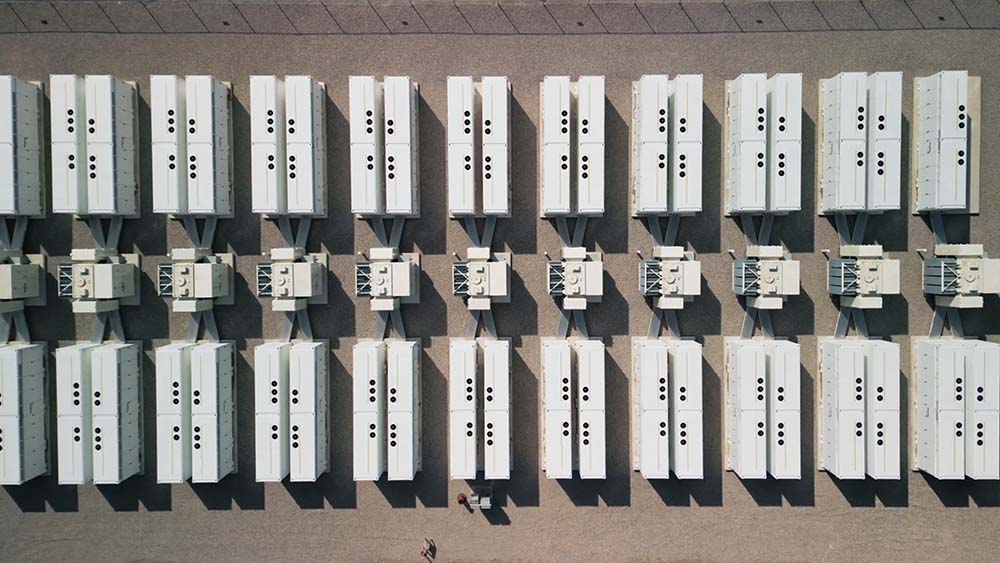
We acted as Finnish legal advisor to Delta Capacity in connection with its acquisition of the ready-to-build Karppio battery energy storage system (BESS) project from Helios Nordic Energy. The acquisition was made and the project will be implemented together with Strioga Family Foundation. The Karppio BESS project is located in Teuva, Finland, and has a capacity of 125 MW / 300 MWh. Delta Capacity will lead the remaining development of the project through to commissioning, planned for 2027, and will serve as long-term asset manager. Delta Capacity is a Swiss-based developer of utility scale battery storage systems. The acquisition adds to Delta Capacity’s growing Nordic portfolio.
Case published 20.7.2026

Winda Energy – Data centre project in Janakkala
We advise Winda Energy Oy on the development of its c. 100 MW data centre project in Janakkala, Finland, a landmark investment exceeding EUR 500 million. The project is being developed in collaboration with European investment company Gi21 Capital. Construction is scheduled to commence in 2027, with completion targeted for 2028. Winda Energy Oy is a renewable energy project development company established in 2011, with a portfolio of wind and solar power projects across Finland. The company manages projects throughout their full lifecycle, from initial planning and permitting to construction and completion.
Case published 8.7.2026