The Ministry of Economic Affairs and Employment is urgently preparing an amendment to the Electricity Market Act, pursuant to which network operators would be required to prioritise the connection requests of electricity consumption sites and electricity storage facilities according to a set order of priority. The amendment aims to establish rules on how network capacity is allocated in situations of scarcity. The change is driven by unprecedented growth in demand for network connections, notably the rapid development of data centre, electricity storage and electric boiler projects.
24.9.2026
Electricity Market Act: Proposed priority procedure to significantly change new electricity network connections in situations of scarce capacity





Marius af Schultén, Kanerva Sunila, Samuli Tarkiainen, Jonas Holm & Noora Ahonen
In practice, the priority procedure would mean that location would become an even more significant consideration in the implementation of large electricity consumption sites and electricity storage projects, as the availability of network capacity would play a decisive role.
The proposed act is intended to enter into force as early as 1 January 2027 and would also apply to connection requests submitted before that date if no connection agreement or conditional connection agreement has been concluded before then.
A new priority procedure for network access
The proposed act includes provisions on a new priority procedure that network operators would be required to apply when processing the connection requests of electricity consumption sites and electricity storage facilities. Connection requests would be placed in priority groups and ranked within each group. The order of priority would apply regardless of the availability of connection capacity, but its effects would materialise when development needs affecting the same part of the electricity network cannot be met simultaneously. The procedure would apply to new connections and capacity increases for existing connections in the main grid, high-voltage distribution networks and distribution systems. It would not, however, apply to the connection of power plants to the network or to operators of closed distribution systems.
According to the draft proposal, the priority procedure would not restrict network operators’ obligation to connect customers nor the right of new customers to connect to the network; it would only affect the order in which connection requests are processed and how capacity is allocated in situations of scarcity. In practice, however, the impact is likely to be broader, as the priority procedure would in future also guide network operators’ development obligation – that is, how they build and reinforce their networks. Although the intention is that the priority procedure would neither expand nor reduce the scope of the development obligation, it would affect the allocation of network operators’ limited resources in the coming years.
Four priority groups proposed – electricity storage facilities would rank the lowest
The draft proposal would place connection requests into four priority groups based on capacity and primary purpose:
- Priority group 1, the highest-ranking group, would include small electricity consumption sites (up to 3 MW), small data centres (up to 1 MW), electricity consumption sites critical to society, small electricity storage facilities (up to 100 kVA) and electricity storage facilities that are connected to a power plant complex and that are not charged with electricity from the electricity network.
- Priority group 2 would include electricity consumption sites of 3–100 MW, mid-size data centres of 1–10 MW, and electricity consumption sites of over 100 MW and data centres of over 10 MW whose flexible generation capacity under a flexibility commitment covers at least 80% of the site’s peak consumption.
- Priority group 3 would include electricity consumption sites of over 100 MW and data centres of over 10 MW with no such flexibility commitments.
- Priority group 4 would include electricity storage facilities other than those in priority group 1, as well as connection requests relating to the target of a connection agreement that was previously terminated due to a material breach, submitted within five years of the termination.
Those seeking a connection could improve the position of their request by providing a flexibility commitment or a production commitment. A flexibility commitment would affect the request’s position both between and within priority groups, whereas a production commitment would only affect the order of priority within a group.
- Under a flexibility commitment, the customer would undertake to provide flexible electricity generation capacity or demand-side flexibility corresponding to at least 10% of the consumption site’s peak consumption on an organised marketplace. The generation capacity would need to be located in the same bidding zone as the electricity consumption site. In practice, customers could improve their priority ranking only with a commitment that includes flexible generation capacity. This flexible generation capacity would need to be capable of generating electricity without interruption, meaning that variable renewable electricity production would be excluded.
- Under a production commitment, the customer would commit to covering at least 50% of the electricity consumption site’s annual electricity consumption with the output of a specified power plant. The power plant would need to have been commissioned no more than 36 months before the consumption site and be located in the same transmission constraint area of the main grid.
A customer could provide either a flexibility commitment or a production commitment, or both. Both commitments would need to be complied with as long as the connection is used, and their material breach could lead to the termination of the connection agreement.
Capacity allocation and network development would be based on the order of priority between and within groups
The network operator would be required to offer electricity network capacity in the order of priority based on the priority groups themselves and the order of priority within each group. The same order would also guide the development of the network.
Connection requests in priority group 1 would be processed in the order in which they were received without any internal ranking. Before offering capacity to priority groups 2–4, the network operator would be required to reserve capacity for the anticipated development of the connections in group 1.
Priority groups 2–4 would be processed in group-specific batches twice a year, with requests in the same group compared against each other. In groups 2 and 3, the highest priority would be granted to a request in an area with available capacity. The next priority would be granted to a request with a flexibility commitment covering the largest share, followed by any production commitments. Within group 4, prioritisation would be based solely on location in an area with available capacity. The development stage of the project would also be taken into account in all of groups 2–4.
Opportunity to comment on the proposed amendments
The draft government proposal is being circulated for comments until 9 October 2026.
Our experienced team of specialists is monitoring the progress of the legislative proposal closely and would be happy to discuss its potential implications for your operations. Please do not hesitate to get in touch so that we can assess what this change would mean for your projects.





Latest insights
Article published 8.5.2026 – Environment, Energy & Green Transition
Reform of Finland’s land use legislation – key takeaways for project developers

 Article published 2.3.2026 – Environment, Energy & Green Transition
Energy security is a matter of investment and competitiveness
Article published 6.2.2026 – Tax & Structuring
Electricity sector Profit Tax Act in conflict with EU law – SAC denied leave to appeal
Article published 2.3.2026 – Environment, Energy & Green Transition
Energy security is a matter of investment and competitiveness
Article published 6.2.2026 – Tax & Structuring
Electricity sector Profit Tax Act in conflict with EU law – SAC denied leave to appeal

 Article published 16.12.2025 – Environment, Energy & Green Transition
Parliament approves substantial increases in tax on mined minerals
Article published 16.12.2025 – Environment, Energy & Green Transition
Parliament approves substantial increases in tax on mined minerals
Tarja Pirinen, Marius af Schultén & Joel Aartolahti
Samuli Tarkiainen & Marius af Schultén
Janne Juusela & Mikko Alakare
Tarja Pirinen, Mikko Alakare & Noora Ahonen
Latest references

Neoen – Sale of data centre
We advised Neoen Renewables Finland Oy, part of the French Neoen Group, in its sale of a data centre project to a consortium consisting of international data centre developers and operators. This marked Neoen’s first data centre development project in Finland. Founded in 2008, Neoen is one of the world’s leading independent renewable energy producers. The company operates in 15 countries. It develops, finances, builds, owns, and operates solar power plants, wind farms, and battery storage systems. Neoen Group is owned by global alternative asset manager Brookfield Corporation.
Case published 17.9.2026

Lenders and Export Credit Agencies – EUR 514.4 million green project financing for Easpring Finland New Materials’ CAM plant
We acted as Finnish law legal adviser to the lenders and the export credit agencies in connection with the EUR 514.4 million green project financing for the development and construction of Easpring Finland New Materials Oy’s cathode active material (CAM) manufacturing plant in Kotka, Finland. The borrower, Easpring Finland New Materials Oy, is a joint venture owned by Beijing Easpring Material Technology, Finnish Minerals Group and LG Energy Solution. The financing was provided by six international commercial banks, with Société Générale acting as financial adviser and mandated lead arranger together with Natixis as co-mandated lead arranger, and DNB, ICBC, ING and Standard Chartered participating as lenders, with support from the export credit agencies Finnvera and Sinosure. The project represents a significant milestone for Finland and the European battery value chain by strengthening Europe’s domestic supply of cathode active materials, a key component in lithium-ion batteries for electric vehicles and energy storage applications. Once the first phase of the project is operational, the Kotka facility is expected to produce approximately 60,000 tonnes of cathode active material annually, making it one of the largest CAM production plants in Europe and supplying leading battery manufacturers across Europe.
Case published 21.7.2026
Delta Capacity – Acquisition of BESS Project
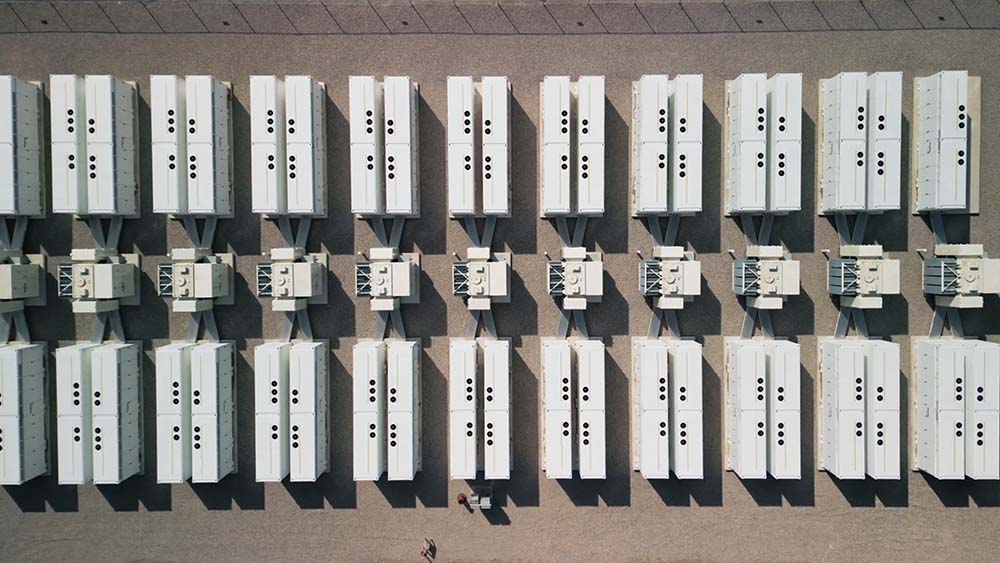
We acted as Finnish legal advisor to Delta Capacity in connection with its acquisition of the ready-to-build Karppio battery energy storage system (BESS) project from Helios Nordic Energy. The acquisition was made and the project will be implemented together with Strioga Family Foundation. The Karppio BESS project is located in Teuva, Finland, and has a capacity of 125 MW / 300 MWh. Delta Capacity will lead the remaining development of the project through to commissioning, planned for 2027, and will serve as long-term asset manager. Delta Capacity is a Swiss-based developer of utility scale battery storage systems. The acquisition adds to Delta Capacity’s growing Nordic portfolio.
Case published 20.7.2026

Winda Energy – Data centre project in Janakkala
We advise Winda Energy Oy on the development of its c. 100 MW data centre project in Janakkala, Finland, a landmark investment exceeding EUR 500 million. The project is being developed in collaboration with European investment company Gi21 Capital. Construction is scheduled to commence in 2027, with completion targeted for 2028. Winda Energy Oy is a renewable energy project development company established in 2011, with a portfolio of wind and solar power projects across Finland. The company manages projects throughout their full lifecycle, from initial planning and permitting to construction and completion.
Case published 8.7.2026