Advice to Other Entities

Advice to Other Entities

We also advise entities other than limited liability companies in various issues concerning their organisation.

We offer practical, tailored solutions to the challenges that entities face frequently. We help our clients choose the most appropriate form of legal entity for their operations. Our expertise also covers issues concerning the development of organisational structure, compliance and the relationships between the entity’s directors and its members.

We also advise non-profit entities, which differ from the common commercial operators in many ways. It is important to sufficiently account for the special characteristics of non-profit entities both when establishing the entity and in its everyday operations.

Latest references

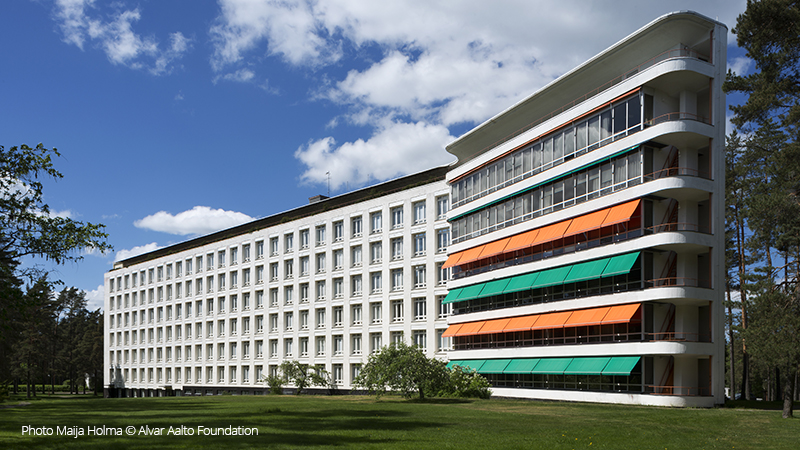
We advised the Hospital District of Southwest Finland and other founders in a pro bono assignment to establish a foundation dedicated to the development and conservation of the Paimio Sanatorium designed by Alvar and Aino Aalto. The foundation will conserve the internationally renowned architecture and significant cultural capital of the properties of the tuberculosis sanatorium. The task of the foundation is to preserve the complex formed by the buildings and furnishings. ‘Castrén & Snellman’s wide expertise and excellent service were of great help to us throughout the project from start to finish. In the course of establishing the foundation, we came across issues that we had not fully anticipated, but with Castrén & Snellman’s experts we were able to find feasible solutions‘, said  Heikki Aalto-Alanen , member of the board of directors of the foundation. ‘We truly appreciate that they chose to support us pro bono and make their expertise available to this project. The conservation of the Paimio Sanatorium is a project of exceptional importance even on an international scale ’,  Aalto-Alanen continues. Plans are for the sanatorium to host, amongst other things, a variety of cultural events in the future. The foundation was established by the Hospital District of Southwest Finland, the State of Finland, the Alvar Aalto Foundation and the cities of Paimio and Turku. The former owner of the sanatorium, the Hospital District of Southwest Finland, transferred the sanatorium properties, including all buildings and furnishings, to the foundation. The establishment of the foundation is the result of an inquiry into the future of Paimio Sanatorium launched by the Ministry of Education and Culture and the Ministry of the Environment in 2019.
Case published 8.1.2021
We assisted the association U-landshjälp från Folk till Folk i Finland rf in a reorganisation of its activities. The association, which is to be dissolved, established a foundation to continue the association’s operations. The transformation of the association into a foundation ensures that the association can continue its activities without altering its original purpose and sustainably support climate work and global development in the future. In the reorganisation, the association transferred its assets and liabilities and operations to the newly established foundation in their entirety. The association’s personnel also transferred to the foundation as existing employees. In the final stage of the reorganisation, the association will be dissolved. U-landshjälp från Folk till Folk i Finland sr will continue to be known by its familiar acronym UFF in the future. The former association will continue to promote the public good as a foundation by maintaining a recycling service in Finland and supporting development work in Africa and India. Through the recycling of clothes, UFF aims to bring about sustainable development that reduces extreme poverty in the world. UFF supports education, food security and income-earning opportunities in Africa and India. It also brings Finns into contact with sustainable development and the affairs of the developing world. In addition to the collection of clothes and donations, the foundation’s activities are made possible by state aid granted by Finland’s Ministry of Foreign Affairs and the support of the European Union.   Virve Groning, UFF sr’s Managing Director: ‘The reorganisation has been a unique moment in UFF’s history. Our objectives were to strengthen the conditions for our future activities and to ensure the continuity of the organisation’s original missions: to support climate work and global development for sustainability. Thanks to Castrén & Snellman’s comprehensive expertise, we have been able to ensure that all the necessary aspects are covered in the reorganisation. By overseeing the change process in a careful and proactive way, we achieved reliable continuity for our practical service work in society, both for our climate service in Finland and our global development programme.’ 
Case published 18.6.2019
We delivered two AI workshops for Fortum Corporation’s Mergers and Acquisitions team, with both legal and business professionals participating. The sessions combined fundamental AI principles with custom use cases for commercially available AI tools tailored to Fortum’s needs. We also presented a bespoke solution merging AI with a script-based tool developed by our Legal Tech team, enabling a more automated way of working. Our experts conducted the training drawing on their legal background and leading experience in this emerging field of legal technology. Participants particularly appreciated the clarity and relevance of the implementations demonstrated. ‘C&S delivered an excellent, well-structured series of workshops, with directly applicable takeaways,’ says Sabina Hautaviita, Legal Counsel for M&A at Fortum.
Case published 9.3.2026
We successfully represented VR Group before the Supreme Court in a case concerning the meal break practice of commuter train drivers. On 6 February 2026, the Supreme Court ruled in VR’s favour (decision KKO:2026:12), confirming that VR had the right to amend the commuter train drivers’ meal break practice in 2021 by rendering the break unpaid in accordance with the applicable collective agreement. This decision clarifies the interpretation of collective agreements and employment legislation as well as the limits of the employer’s right to direct work. Over 250 commuter train drivers challenged the unpaid meal break practice which VR introduced in April 2021. Before the change, meal breaks had a long history of being paid. The change was based on the train drivers’ collective agreement, which allows for meal breaks to be organised either as paid or unpaid time. The Supreme Court ruled that the scheduling and managing of breaks falls within the core area of the employer’s right to direct work. This increases the threshold for an established practice becoming a binding condition for the parties. Merely following a practice consistently and over a long period of time does not make the practice binding; instead, the employer’s intent to commit to the practice must be clearly evident from the employer’s conduct or other circumstances. As both alternatives – paid and unpaid – for organising meal breaks had been retained in the collective agreement despite other amendments over the years, it could not be considered that VR had intended to commit to the paid break practice and waive its right to direct work as regards break scheduling. It was also significant that the employment contracts explicitly referred only to the collective agreement as regards working time. The Supreme Court deemed that the employees’ paid meal break was not an established term of employment and that VR was entitled to change the practice based on the collective agreement. The employer had the right, by virtue of its right to direct work, to unilaterally change the meal break practice by choosing to apply the other arrangement permitted by the collective agreement.
Case published 3.3.2026