John F. Kennedy said, ‘Change is the law of life. Those who look only to the past or present are certain to the miss the future’.
15.6.2016
The Evolution of a Lawyer’s Mobile Phone


Carola Lindholm
On the other hand, unless you take a good look at the past, you are not likely to understand how you ended up in the present or where the future is likely to be heading. So from a lawyer’s perspective, and coming from a firm with a mission embracing change, what has really changed?
Late in 1997 when I graduated from law school at the University of Helsinki, I got my first mobile phone ever. It was a Nokia 6160. Back then mobile phones were just phones, and mine had no other connection to the law than that it was the perfect graduation gift.
Today our lives are in our mobile phones. Even current laws, relevant case law and articles are only a few clicks away.
Are Robots Taking over the Legal Profession?
What’s next then? Will all lawyers be replaced by artificial intelligence as some say?
In 2013, Frey & Osborne’s conducted a study on the future of employment asking how susceptible different jobs were to computerisation. The likeliness for attorneys was 3.5%, for judges 40.1 % and for legal assistants 94.5%.
But what do these numbers really tell us? They show where there is most room for additional efficiency—and, yes, artificial intelligence.
Research shows that 70% of those who seek or need legal advice don’t get it when they need it or, for example, can’t reasonably afford it. This is unheard of for the new generation of digital natives growing up.
Other surveys show that lawyers today still spend an average of over 30% of their time searching for data. This again is not acceptable in times of increased cost awareness and efficiency requirements.

Supercharging Legal Reseach
While many countries still have some legal restraints, such as bar rules, prohibiting legal advice given by non-lawyers, the trends discussed above are the key drivers behind the rise of new advanced tools in legal research, such as ROSS and KELSEN. These new tools find relevant answers to legal questions by combining big data and machine learning technologies and learn from user ratings to improve the accuracy of the search results with every search.
Another one, LEX MACHINA, mines litigation data, revealing insights and meaningful patterns in such data about judges, lawyers, parties and patents culled from millions of pages of IP litigation information. I am sure we will have an app for each of these on our mobile phones in no time.
New Tools for New Times
These developments are not limited to legal research, though. Contract drafting is also becoming more and more automated, enabling a much wider range of users to draft contracts themselves with the help of a smart interview conducted by automation software.
The efficiencies from automation accrue beyond the drafting stage and could reach throughout the life cycle of a contract. During the midstream of a contract’s life, its obligations can be performed or renegotiated.
Software can translate the legal form of a contract into human- and machine-readable (operationalisable) versions, thereby reducing the risk of an inadvertent breach or over-performance. Digitised contract documents can be efficiently stored and retrieved when changes in the legal or business environment call for adjustments or modification of the initial agreement.
Information can also be extracted from stored documents to reveal patterns and risks in a company’s contract portfolio. Finally, standard and effectively modularised contracts are, all else being equal, less likely to give rise to disputes or to costly and uncertain litigation. Indeed, in the foreseeable future, one might even imagine the drafting of contracts in machine-readable language that will enable some type of automated dispute resolution and enforcement.
Picture this: in-house lawyers will receive daily alerts on their mobile phones from a virtual service provider telling them which contracts are expiring or in need of renewal due to changes in their companies’ production. The claims will then be automatically filed for dispute resolution unless otherwise instructed or judgements forwarded for execution when lacking voluntary performance, and so on.
I can only begin to imagine what possibilities augmented reality, for example, could bring to the world of contracts.
Forging into the Future
Digitalisation is a means for renewal. At the moment, our firm is adopting automated contract drafting and document assembly solutions. This will make our drafting processes as lean as possible, adding a great dose of both quality and efficiency to it.
Automated document assembly limits the amount of manual work needed and the risk of drafting errors by transforming frequently used complex documents into intelligent templates. With a library of know-how and alternative clauses built into the templates, tailor-made documents can be drafted and negotiated much more quickly.
The possibilities for utilising document automation are numerous and only time will tell which paths it will take. If you want to learn more, please feel free to give me a call. After all, my mobile phone still works as a phone as well.

Latest insights
Article published 1.10.2026 – Financial Regulation
New EU-driven banking M&A rules entered into force in Finland on 1 October 2026
 Article published 24.9.2026 – Environment, Energy & Green Transition
Electricity Market Act: Proposed priority procedure to significantly change new electricity network connections in situations of scarce capacity
Article published 24.9.2026 – Environment, Energy & Green Transition
Electricity Market Act: Proposed priority procedure to significantly change new electricity network connections in situations of scarce capacity




 Article published 11.9.2026
Finland proposes a new data centre register – draft legislation open for comments
Article published 11.9.2026
Finland proposes a new data centre register – draft legislation open for comments



 Article published 1.9.2026 – Intellectual Property
New marketing and consumer protection requirements call for action
Article published 1.9.2026 – Intellectual Property
New marketing and consumer protection requirements call for action

Hannu Huotilainen
Marius af Schultén, Kanerva Sunila, Samuli Tarkiainen, Jonas Holm & Noora Ahonen
Marius af Schultén, Antti Kaakkola, Samuli Tarkiainen, Mikko Alakare, Janne Juusela & Jerker Pitkänen
Hilma-Karoliina Rozell
Latest references

Efima – Sale of AI business
We advised Efima Oyj on the sale of its AI business to Better Care Technologies Oy. The transaction included Efima’s Moiva AI platform developed for the care sector, the related technology and brand, customer contracts, and the experts working in the business. Efima is a Finnish digital company that supports the sustainable growth of large and mid-sized companies by streamlining their business processes and by creating competitive advantage through the innovative use of artificial intelligence and data. The company has nearly 200 experts based in Helsinki and Tampere.
Case published 21.9.2026

Neoen – Sale of data centre
We advised Neoen Renewables Finland Oy, part of the French Neoen Group, in its sale of a data centre project to a consortium consisting of international data centre developers and operators. This marked Neoen’s first data centre development project in Finland. Founded in 2008, Neoen is one of the world’s leading independent renewable energy producers. The company operates in 15 countries. It develops, finances, builds, owns, and operates solar power plants, wind farms, and battery storage systems. Neoen Group is owned by global alternative asset manager Brookfield Corporation.
Case published 17.9.2026
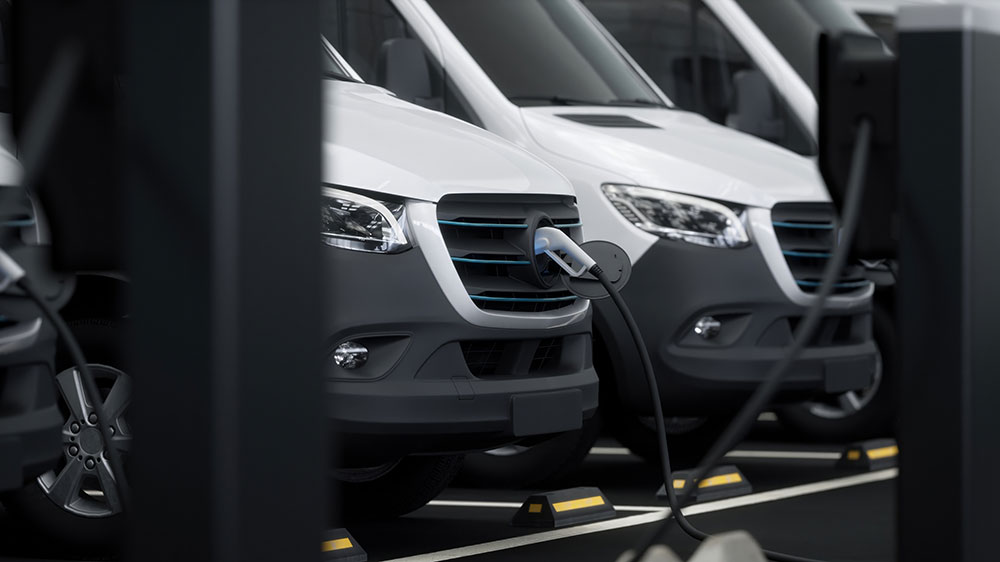
Jolt Capital and Tesi – Investment in VEV
We advised Jolt Capital and Tesi in connection with their investment in VEV, a leading provider of commercial fleet electrification solutions. The investment, led by Jolt Capital with Tesi as co-investor, will support VEV’s next phase of growth and expansion across Europe. As part of the transaction, VEV became an independent company following the acquisition of Vitol’s stake in the business. Founded by Vitol, VEV provides integrated fleet electrification solutions combining fleet strategy, charging infrastructure, energy supply and operational services. Through its VEV IQ platform, the company supports more than 6,000 commercial electric vehicles across Europe and has been deployed across more than 600 sites spanning the transport, logistics and waste sectors. Jolt Capital is a private equity firm focused on growth investments in European deeptech companies. Tesi is a Finnish state-owned investment company that promotes Finnish business and economic growth through investments. We advised Jolt Capital and Tesi on the equity financing and structuring aspects of the transaction. International law firm Goodwin advised the investors on the acquisition of VEV.
Case published 10.9.2026

VR Group – Intellectual property matters
VR-Group Plc is a transport and logistics group owned by the Finnish State, operating passenger and freight rail transport in Finland with activities also in the Swedish market. VR Group provides passenger, logistics and maintenance services with over 160 years’ experience in developing responsible transport of the future. We advise VR Group in intellectual property matters as part of the company’s wider brand protection efforts. Our assignments have included advice on copyright, design rights and trademarks, focusing on the protection of the company’s visual identity – including its distinctive green colour – in connection with transport services as part of a comprehensive IP protection strategy. VR Group’s consistent brand building has also received recognition, including the Finland Chamber of Commerce’s Brand of the Year award in 2026. In the competition, brands were viewed comprehensively from various perspectives, including their story, strategic role, brand renewal ability and intellectual property protection. The jury found that VR had understood the importance of the protection of its brand as part of a comprehensive business strategy.
Case published 9.9.2026