The EU’s relatively old Product Liability Directive (85/374/EEC), adopted already in 1985, has been under the review of the European Commission in recent years.
27.3.2023
Product liability rules under reform in the EU


Piia Raappana
Related services
In its current form, the Product Liability Directive establishes strict, i.e., no-fault, liability of the producer for a damage caused to a natural person and to a property used mainly for private purposes, which is caused by insufficient safety of the producer’s ‘products’, i.e., mainly movable objects and electricity. In Finland, the Product Liability Directive was implemented with the Finnish Product Liability Act (694/1990, as amended).
In 2018, the European Commission evaluated the Product Liability Directive and concluded that, despite the passing of time, it has remained mainly efficient and relevant, but that it also has some shortcomings. Among other things, the identified shortcomings were related to the current Product Liability Directive not adequately addressing the challenges posed by digital development and circular economy.
To update the product liability rules, the European Commission published a proposal for a new directive on liability for defective products on 28 September 2022, which would repeal the current Product Liability Directive (the proposal is available here). In the same connection, the European Commission also published a proposal for a directive on AI liability (available here); however, the latter will not be discussed further in this blog.
Digital development and circular economy taken into account in the proposed new Product Liability Directive
The proposed new Product Liability Directive includes the following key changes:
- The definition of a ‘product’ is extended to include both tangible and intangible products. The product liability rules would thus not only cover movables and electricity, but also software and digital manufacturing files which mean digital versions or digital templates of a movable. In future, product liability could therefore exist, for example, for a damage caused by software.
- The concept of damage is extended to cover, for example, the loss or corruption of data that is not used exclusively for professional purposes. According to the proposal, there would also be no maximum or minimum EUR limits for the compensation in future.
- Companies making substantial modifications to the products that have already been placed on the market or put into service are also covered by the product liability rules in future in order to take into account circular business models.
- The burden of proof remains on the injured person, who has to prove the damage they have suffered, the defectiveness of the product and the causal link between these two. However, since especially in complex cases, the injured may have difficulties in proving the damage, the proposal contains various presumption rules to lighten the burden of proof.
- In future, Member States would be required to publish court judgments relating to product liability so that, in the interests of a more harmonised interpretation of the product liability rules, other national courts can take these judgments into account.
What next?
The legislation project in Finland is still in early stages. In Finland, the Legal Affairs Committee issued a statement on the proposal for a new Product Liability Directive at the end of 2022, and the matter will proceed to committee reading in the spring. The Government has deemed it important that the product liability rules are updated to better reflect the impact of the digital age as well as the effects of circular economy and global value chains, but it also deemed that the proposal included a number of questions that require further discussion. The precise timeline of the legislation project has not yet been published, but the preparatory work will continue both at the EU level and the national level in the spring of 2023.

Latest insights
Article published 17.10.2025 – Intellectual Property
Is your IP safe? Eight real-life tips to avoid costly mistakes

 Article published 13.3.2024 – Intellectual Property
Changed rules on green claims – does your marketing contain claims about environmental objectives or emissions compensation?
Article published 13.3.2024 – Intellectual Property
Changed rules on green claims – does your marketing contain claims about environmental objectives or emissions compensation?

 Article published 7.12.2023 – Data & Technology
Agreements define data sharing and re-use
Article published 8.11.2023 – Data & Technology
Prepare for the new wave of digital regulation
Article published 7.12.2023 – Data & Technology
Agreements define data sharing and re-use
Article published 8.11.2023 – Data & Technology
Prepare for the new wave of digital regulation



Lauri Laatunen & Janne Koivisto
Hilma-Karoliina Rozell & Karla Kallela
Kim Parviainen, Eija Warma-Lehtinen & Sakari Salonen
Latest references
Anora Group – Global Brand Portfolio Management and IP Enforcement
We are advising Anora Group in brand protection and intellectual property enforcement matters globally. Our IP team manages Anora Group’s global trademark and design portfolio, including registration, prosecution, opposition and enforcement. We also advise Anora Group in questions concerning marketing law, social media, domain names and cybersquatting. Anora Group Plc is a publicly listed company. It was born in 2021 through the merger of the Finnish Altia Oyj and the Norwegian Arcus ASA. Anora Group is a leading wine and spirits brand house in the Nordic Region and a global industry forerunner in sustainability. Anora Group has a large portfolio of iconic brands such as Koskenkorva, Linie, Larsen, Skagerrak, Chill Out, Ruby Zin, Wongraven, O.P. Anderson and Falling Feather. Its key brands are exported to over 30 markets globally.
Case published 28.1.2026
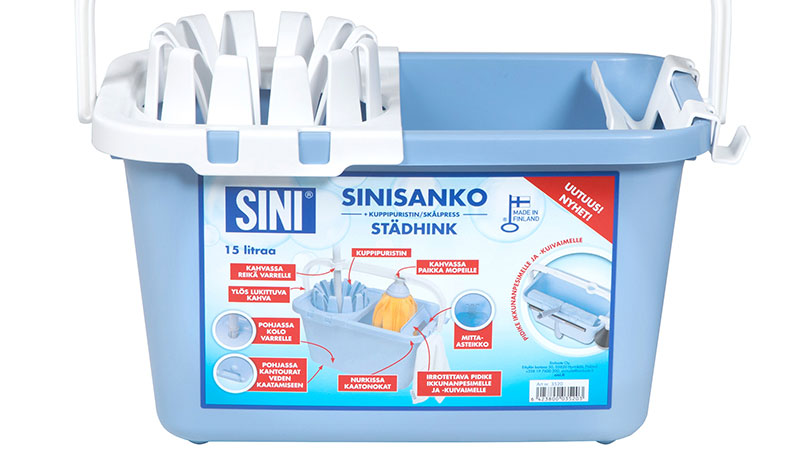
Sinituote – Protection and Enforcement of Brands and Designs
We are assisting Sinituote in the protection and enforcement of its trademarks and designs and in issues related to the management of its IP portfolio. Under the SINI brand, Sinituote markets and sells cleaning tools and products. SINI products are among the most popular ones in their product category in Finland. Kungs is the leading Nordic brand for automobile care. It includes winter products such as snow brushes and ice scrapers that are designed and tested to suit the extreme Finnish winter conditions. One of Sinituote’s most legendary products is the Sinipiika mop that was developed in the 1950s and is still in production today. In addition to SINI and Kungs, the Sinituote brands also include Savu, Lundia, Rörets and VS-Harja. The products are designed and mostly also manufactured in Finland. Sinituote has its own factory in the small town of Kokemäki in southwestern Finland. The group’s R&D focuses not only on the high quality of the products but also their ergonomics, environmental friendliness and design. Sinituote makes considerable investments in R&D and design and also actively protects and enforces its trademarks and designs.
Case published 22.1.2026

Tactic Games Oy – Protection and enforcement of trademarks
We represent the Tactic Games Oy, a leading international developer and manufacturer of board games, as lead counsel in its global brand protection, EU-wide customs enforcement and trademark disputes concerning the famous MÖLKKY trademark. MÖLKKY is an award-winning outdoor game marketed and sold in Europe, Australia, USA and Canada. The Tactic Games Oy has been the exclusive distributor of the MÖLKKY game since 2010, and it purchased the manufacturing and intellectual property rights for the game from Lahden Työn Paikka Oy in January 2017. Tactic’s product portfolio includes also other well-known games, such as Kimble, Alias and iKNOW.
Case published 15.1.2026

Alma Media – Brand Protection and Enforcement
We are advising Alma Media Corporation and its group companies in trade mark and other intellectual property right protection and infringement matters as well as in questions relating to brand portfolio management. We have also been involved in creating the brand strategy for the company and have handled marketing law and domain issues. Alma Media is a dynamic multi-channel media company with a strong capacity for renewal. The best-known brands of the company include Kauppalehti, Talouselämä, Affärsvärlden, Iltalehti, Aamulehti, Etuovi.com and Monster.
Case published 9.1.2026