Companies should make a point of reviewing their intellectual property rights on a regular basis. With a little effort today, it’s possible to avoid major and costly problems tomorrow.
17.10.2025
Is your IP safe? Eight real-life tips to avoid costly mistakes



Lauri Laatunen & Janne Koivisto
Related services
Issues with IP rights often come to light in connection with business transactions – such as M&A deals or financing rounds – when lawyers conduct due diligence reviews. At that point, the milk is often already spilled. At worst, these issues can derail an acquisition or block financing.
Problems that emerge during DD are naturally hardest on company owners and management, but they can be frustrating for the lawyers conducting the review as well. After all, many of these issues are entirely preventable with proper handling from the start.
In this article, we will share eight practical tips to help your company take better care of its IP rights. They are based on issues we regularly encounter during DD reviews.
Could today be the day to make sure that a future transaction or financing round doesn’t fall through due to insufficiently managed IP rights?
1. Find out what IP rights your company has
To protect your company’s intangible assets, you first need to know what you actually own. Companies are generally well aware of their registered IP rights – after all, they have registration certificates and pay fees for them.
There are, however, two common problem areas. First, companies don’t always realise they have other intangible assets that could be registered but aren’t, leading to missing trademarks or unprotected inventions and designs. Second, companies often have an incomplete picture of their unregistered IP rights, i.e. copyrights, related rights and trade secrets. It’s difficult to protect something you don’t know you have.
2. Agree on the transfer of IP rights
Every time someone develops something for your company, make sure you have it in writing that the related IP rights transfer to the company. This applies to everyone – employees, owners and founders, managers and board members, consultants and freelancers, subcontractors and partners, as well as interns and students. Without a clear contract, the developer may retain the rights, which can make it difficult or impossible to commercialise what’s been created.
3. Don’t forget alteration and onward transfer rights
When agreeing on the transfer of IP rights to the company, it’s important to make sure that the transfer is sufficiently comprehensive in terms of time, geography and content. A small but crucial detail is that when transferring copyright, you must separately agree that the company as the transferee also has the right to alter the work and transfer the copyright to others. Without this express provision, the company isn’t permitted to do either.
4. Use open source wisely
If your company uses open source in its products, find out exactly what licensing terms apply to the components you’re using. Without clarifying the licence requirements upfront, you may inadvertently end up using so-called copyleft licences in your software products. In the worst case, careless use of copyleft licences can lead to an obligation to disclose the source code of the company’s proprietary products containing copyleft-licensed components to anyone who requests it.
5. Make sure compensation matters are in order
When agreeing on compensation for the transfer of IP rights, ensure the agreement is sufficiently comprehensive. It’s generally advisable to agree that the developer’s compensation includes payment for the IP rights transfer as well. Don’t forget about mandatory legal requirements, though. For example, the Act on the Right in Employee Inventions requires employers to pay reasonable compensation to employees – and in some cases, members of management – for their inventions, and this obligation cannot be waived by agreement.
6. Register your trademarks
Some people mistakenly believe that exclusive rights to a trademark can be obtained simply through establishing the trademark. However, this is only possible in Finland and requires substantial evidence, which is why, in practice, trademarks should always be registered. When registering trademarks, make sure to register all the trademarks your company uses and ensure that the registrations cover the relevant territories and categories of goods and services.
7. Protect your trade secrets
Make sure that your company has identified its trade secrets and established documented practices to protect them. It’s essential to protect trade secrets both contractually, for example through non-disclosure, employment and consultancy agreements, and operationally, through adequate data security, access control and other protective measures. Failing to properly identify or protect trade secrets can expose your company to disputes and, in the worst case, result in the complete loss of legal protection for some trade secrets.
8. Ask an expert when needed
The issues outlined above can seriously hinder your company’s operations or even bring them to a standstill. The simplest way to avoid problems is to review the necessary safeguards with an expert well in advance of any transaction, dispute or other important juncture in your company’s operations. Our goal is to have your company pass a potential DD review with flying colours.


Latest insights
Article published 1.9.2026 – Intellectual Property
New marketing and consumer protection requirements call for action
 Article published 13.3.2024 – Intellectual Property
Changed rules on green claims – does your marketing contain claims about environmental objectives or emissions compensation?
Article published 13.3.2024 – Intellectual Property
Changed rules on green claims – does your marketing contain claims about environmental objectives or emissions compensation?
 Article published 7.12.2023 – Data & Technology
Agreements define data sharing and re-use
Article published 8.11.2023 – Data & Technology
Prepare for the new wave of digital regulation
Article published 7.12.2023 – Data & Technology
Agreements define data sharing and re-use
Article published 8.11.2023 – Data & Technology
Prepare for the new wave of digital regulation



Hilma-Karoliina Rozell
Hilma-Karoliina Rozell & Karla Kallela
Kim Parviainen, Eija Warma-Lehtinen & Sakari Salonen
Latest references

VR Group – Intellectual property matters
VR-Group Plc is a transport and logistics group owned by the Finnish State, operating passenger and freight rail transport in Finland with activities also in the Swedish market. VR Group provides passenger, logistics and maintenance services with over 160 years’ experience in developing responsible transport of the future. We advise VR Group in intellectual property matters as part of the company’s wider brand protection efforts. Our assignments have included advice on copyright, design rights and trademarks, focusing on the protection of the company’s visual identity – including its distinctive green colour – in connection with transport services as part of a comprehensive IP protection strategy. VR Group’s consistent brand building has also received recognition, including the Finland Chamber of Commerce’s Brand of the Year award in 2026. In the competition, brands were viewed comprehensively from various perspectives, including their story, strategic role, brand renewal ability and intellectual property protection. The jury found that VR had understood the importance of the protection of its brand as part of a comprehensive business strategy.
Case published 9.9.2026

Anora Group – Global Brand Portfolio Management and IP Enforcement
We are advising Anora Group in brand protection and intellectual property enforcement matters globally. Our IP team manages Anora Group’s global trademark and design portfolio, including registration, prosecution, opposition and enforcement. We also advise Anora Group in questions concerning marketing law, social media, domain names and cybersquatting. Anora Group Plc is a publicly listed company. It was born in 2021 through the merger of the Finnish Altia Oyj and the Norwegian Arcus ASA. Anora Group is a leading wine and spirits brand house in the Nordic Region and a global industry forerunner in sustainability. Anora Group has a large portfolio of iconic brands such as Koskenkorva, Linie, Larsen, Skagerrak, Chill Out, Ruby Zin, Wongraven, O.P. Anderson and Falling Feather. Its key brands are exported to over 30 markets globally.
Case published 28.1.2026
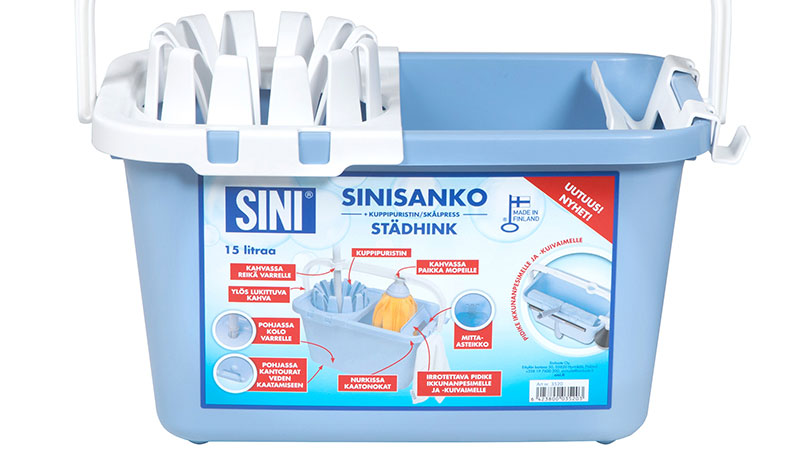
Sinituote – Protection and Enforcement of Brands and Designs
We are assisting Sinituote in the protection and enforcement of its trademarks and designs and in issues related to the management of its IP portfolio. Under the SINI brand, Sinituote markets and sells cleaning tools and products. SINI products are among the most popular ones in their product category in Finland. Kungs is the leading Nordic brand for automobile care. It includes winter products such as snow brushes and ice scrapers that are designed and tested to suit the extreme Finnish winter conditions. One of Sinituote’s most legendary products is the Sinipiika mop that was developed in the 1950s and is still in production today. In addition to SINI and Kungs, the Sinituote brands also include Savu, Lundia, Rörets and VS-Harja. The products are designed and mostly also manufactured in Finland. Sinituote has its own factory in the small town of Kokemäki in southwestern Finland. The group’s R&D focuses not only on the high quality of the products but also their ergonomics, environmental friendliness and design. Sinituote makes considerable investments in R&D and design and also actively protects and enforces its trademarks and designs.
Case published 22.1.2026

Tactic Games Oy – Protection and enforcement of trademarks
We represent the Tactic Games Oy, a leading international developer and manufacturer of board games, as lead counsel in its global brand protection, EU-wide customs enforcement and trademark disputes concerning the famous MÖLKKY trademark. MÖLKKY is an award-winning outdoor game marketed and sold in Europe, Australia, USA and Canada. The Tactic Games Oy has been the exclusive distributor of the MÖLKKY game since 2010, and it purchased the manufacturing and intellectual property rights for the game from Lahden Työn Paikka Oy in January 2017. Tactic’s product portfolio includes also other well-known games, such as Kimble, Alias and iKNOW.
Case published 15.1.2026