Laura Häyrinen

Senior Associate, Member of the Finnish Bar

Services

  1. Employment

I am specialised in employment law. I assist our clients in various questions that can arise during employment, such as questions related to working hours, termination of employment, the acts on equality, non-discrimination and co-operation, and the applicable collective agreement. I advise our clients in various matters related to employment law and represent them in courts. I also enjoy providing training in employment law matters.

I have spent most of my career working with employment law cases, and I still find this branch of law extremely interesting. Employment law cases usually derive from concrete real-life problems, and that is what keeps me motivated year after year. I have a wide experience from the legal services industry, but I have also worked in an employer organisation and in the Confederation of Finnish Industries. This diverse background gives me a valuable perspective on various kinds of employment law issues. Thanks to my background, I am also very familiar with the national collective agreement system.

I am a very approachable and sociable person, and clients find it easy and comfortable to work with me. I have an ambitious and curious attitude towards every assignment: I take a personal interest in each case and leave no stone unturned to find the perfect solution. Sometimes it is necessary to resolve the matter in court, sometimes it may be wise to consider a settlement. I always have the customer’s interest in the centre of my action, and I find it extremely rewarding to work in close contact with our clients.

I am currently on family leave.

Latest references

We successfully represented VR Group before the Supreme Court in a case concerning the meal break practice of commuter train drivers. On 6 February 2026, the Supreme Court ruled in VR’s favour (decision KKO:2026:12), confirming that VR had the right to amend the commuter train drivers’ meal break practice in 2021 by rendering the break unpaid in accordance with the applicable collective agreement. This decision clarifies the interpretation of collective agreements and employment legislation as well as the limits of the employer’s right to direct work. Over 250 commuter train drivers challenged the unpaid meal break practice which VR introduced in April 2021. Before the change, meal breaks had a long history of being paid. The change was based on the train drivers’ collective agreement, which allows for meal breaks to be organised either as paid or unpaid time. The Supreme Court ruled that the scheduling and managing of breaks falls within the core area of the employer’s right to direct work. This increases the threshold for an established practice becoming a binding condition for the parties. Merely following a practice consistently and over a long period of time does not make the practice binding; instead, the employer’s intent to commit to the practice must be clearly evident from the employer’s conduct or other circumstances. As both alternatives – paid and unpaid – for organising meal breaks had been retained in the collective agreement despite other amendments over the years, it could not be considered that VR had intended to commit to the paid break practice and waive its right to direct work as regards break scheduling. It was also significant that the employment contracts explicitly referred only to the collective agreement as regards working time. The Supreme Court deemed that the employees’ paid meal break was not an established term of employment and that VR was entitled to change the practice based on the collective agreement. The employer had the right, by virtue of its right to direct work, to unilaterally change the meal break practice by choosing to apply the other arrangement permitted by the collective agreement.
Case published 3.3.2026
On Thursday, 19 November 2026, the shares of Anthropic were admitted to trading on Nasdaq. The initial public offering of Anthropic marks the largest IPO in history. In connection with the IPO, Anthropic carried out a public offering to certain European countries, including Finland. Castrén & Snellman acted as Finnish counsel to Anthropic in the European offering.
Case published 20.11.2026
We advised Cibus Real Estate AB (publ) on its acquisition of three newly built retail properties in Pori, Finland.  Kesko is the tenant in all three properties, and the average lease term is 8.1 years. Cibus is a real estate company listed on Nasdaq Stockholm Mid Cap. The company’s business concept is to acquire, develop and manage properties in Europe with daily goods chains as anchor tenants. The company currently owns approximately 700 properties in Europe.
Case published 12.11.2026
We advised Seaya Nova and Molten Ventures as Finnish counsel in connection with the USD 80 million Series C financing of Pliant, a Berlin-based fintech specialising in B2B payment solutions and corporate credit cards. The financing round was led by Seaya Nova and Speedinvest, with participation from Illuminate Financial, Motive Partners, Molten Ventures and Citi Ventures. Founded in Berlin in 2020, Pliant provides modular payment solutions for businesses and holds an EU e-money licence in Finland as well as a licence from the UK Financial Conduct Authority. We advised on the Finnish law aspects of the transaction alongside YPOG, which acted as lead counsel to Seaya Nova and Molten Ventures.
Case published 12.11.2026
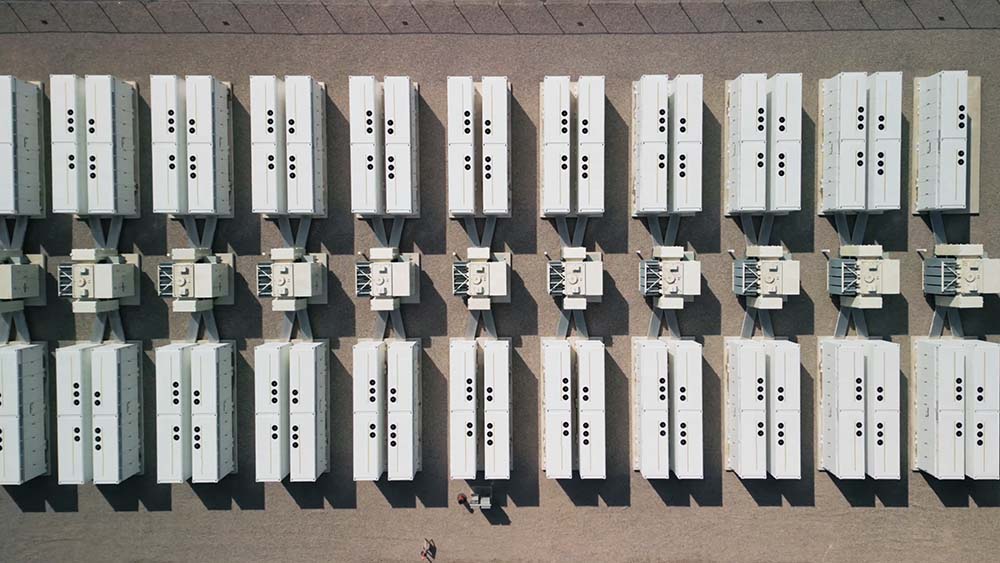
We advised Nala Renewables on the Finnish law aspects of the development, acquisition and financing of its battery energy storage system (BESS) project in Vuolijoki, Finland. The project comprises a 125 MW / 250 MWh battery energy storage system. Our advice extended beyond financing to the transaction’s legal due diligence and the acquisition of the project company. We also advised on key project contracts and financing documentation for the project finance facilities provided by Coöperatieve Rabobank U.A. The project is part of Nala Renewables’ growing portfolio of battery storage assets in Finland and the wider Nordic region, supporting the integration of renewable energy and contributing to the flexibility and stability of the Finnish electricity grid.
Case published 3.11.2026
We advised Foundation Clinic in connection with its funding round backed by a group of prominent Finnish technology entrepreneurs and investors, including founders behind Supercell and Wolt. Foundation Clinic is a Finnish healthcare company developing a new approach to private healthcare focused on preventive, data-driven and continuous care. The company aims to combine comprehensive health data with ongoing medical care to identify and address health risks at an early stage.
Case published 29.10.2026
We advised Delta Capacity AG in a project financing of two battery energy storage systems (BESS). The financed projects are among the largest BESS developments in Finland to enter construction with 250 MW / 600 MWh combined capacity. The financing was provided by Société Générale with support from Finnvera. Construction of both projects, located in Lapinlahti and Teuva, has already begun and the commercial operations are targeted to commence in late 2027 with partial tolling agreements already in place for both assets. The project in Lapinlahti is executed in partnership with Covenergo, while the project in Teuva is executed in partnership with Strioga Family Foundation. Delta Capacity is a Swiss developer of utility-scale battery storage systems. The projects strengthen Delta Capacity’s growing Nordic portfolio and support the flexibility of Finland’s electricity system by adding energy storage capacity, enabling production optimization as well as participation in electricity markets and reserve services.
Case published 28.10.2026
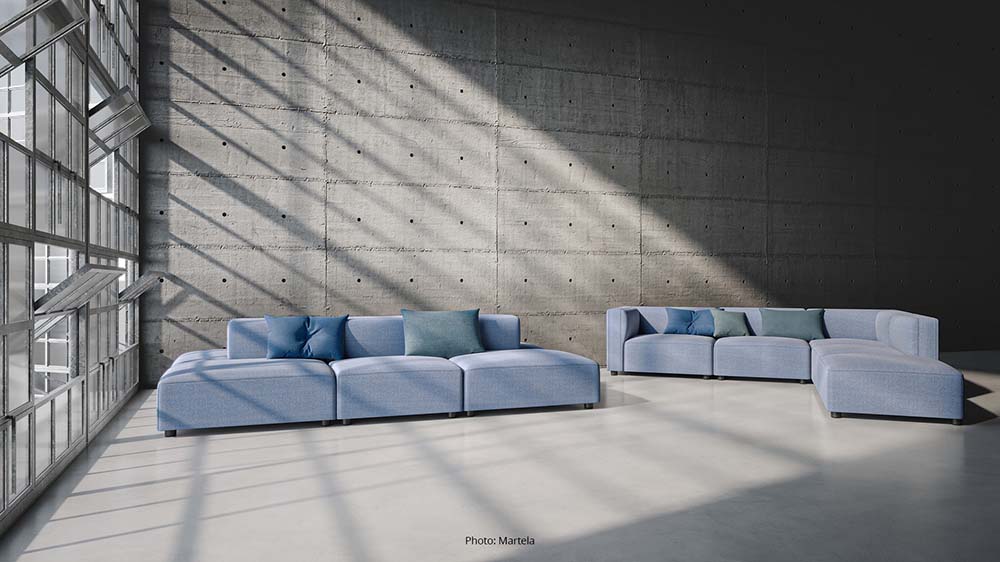
We acted as legal adviser to Martela Corporation in its directed share issue, through which Martela raised gross proceeds of approximately EUR 7.2 million to strengthen the company’s financial position and liquidity and to create headroom for continuing the necessary development and efficiency measures. In connection with the directed share issue, Martela’s unlisted series K shares, which carried greater voting rights, were combined with its listed series A shares. Following the combination, the company has only one share series, which is traded on the regulated market maintained by Nasdaq Helsinki Ltd, with each share carrying one vote and otherwise identical rights. Martela is a Nordic leader specialising in user-centric working and learning environments. With over 80 years of experience, Martela creates the best places to work and offers its customers the Martela Lifecycle solutions which combine furniture and related services into a seamless whole.
Case published 27.10.2026