The European Commission adopted a proposal for a Green Claims Directive on 22 March 2023. This completely new directive is intended to act as special legislation concerning environmental claims. The proposal applies to B2C commercial practices and concerns explicit environmental claims made in a textual form or contained in an environmental label that relate to a product or the trader itself. A claim that a packaging is made using recycled plastic, for example, is an environmental claim.
3.5.2023
Green Claims Directive calls for verified and specified environmental claims in B2C commercial practices



Hilma-Karoliina Rozell & Karla Kallela
Related services
In addition to proposing a new Green Claims Directive, the Commission has also proposed amending certain other directives, such as the Directive 2005/29 concerning unfair B2C commercial practices. Through the proposed amendments, the Commission would ban generic environmental claims, such as ‘green’, ‘environmentally friendly’ and ‘ecological’, if a company cannot substantiate them with recognised excellent environmental performance. Directive 2005/29 is intended to act as general legislation that applies to environmental claims, whereas the Green Claims Directive would apply to explicit environmental claims and the substantiating, verifying and communicating thereof.
Substantiation and communication requirements specified and increased
Pursuant to the proposed directive, a maker of environmental claims must carry out an assessment to substantiate such claims. The assessment must include certain components. For example, the company must specify whether the environmental claim is related to the product as a whole or only a part thereof. The company must also substantiate the claim by supporting it with widely recognised scientific evidence. Furthermore, the company must demonstrate that the environmental claim does not concern a regulatory requirement that the product must fulfil in any case.
What’s more, the proposed directive lays down requirements on how environmental claims must be communicated. When making a claim that concerns the future, the company would have to include a time-bound commitment for improvements inside its own operations and value chains. The proposed directive also lays down disclosure obligations, according to which the company would have to communicate to the consumer how the improvements that are subject to the environmental claim are achieved.
Companies that offset their emissions would have to provide consumers with more detailed information on the offsetting, such as information on the nature of the offsets and whether these relate to emissions reductions or removals.
Third-party verification before using environmental claims in commercial communication
The proposed directive states that an independent third party, i.e. a conformity assessment body, must verify the substantiation and communication of an environmental claim. The current task of conformity assessment bodies is to assess the conformity of various devices, for example, so this would mean a major change. It should also be noted that the environmental claim must be verified by the third party before the claim is used in commercial communication.
Another major aspect of the proposed directive is that the research data used for assessing the environmental claim should be reviewed and updated whenever the circumstances so require, in any case within five years from when the data was made public. The updated claims are subject to assessment by the conformity assessment bodies as well.
Financial and other consequences for making unfounded environmental claims
Pursuant to the proposed directive, Member States would be required to lay down effective and proportionate penalties for infringing the directive’s provisions. These penalties could take the form of fines imposed by a supervisory authority. The proposed fines would likely be significant as their goal is to prevent any economic benefits derived from making unfounded environmental claims. Under the proposed directive, a company could also be excluded from access to public funding for up to 12 months as penalty for making environmental claims that infringe on the proposed directive. The proposal would also make it possible to confiscate any revenues gained from products that are the subject of infringing claims.
Under the proposed directive, non-governmental organisations, among others, would have the right to submit complaints concerning infringing claims. Non-governmental organisations with an interest in the environmental marketing of companies are likely to make active use of this opportunity.
Recognise environmental claims and substantiate them with evidence
While the contents of the directive proposals might still change and the national implementation of the directives will take some time, companies should already take action. An important first step is that everyone in the organisation is made aware of what constitutes an environmental claim in marketing or company communications. Companies should also assess how consumers are likely to understand their environmental claims and whether these claims are sufficiently substantiated. It is worth noting that current legislation already requires that companies are able to prove an environmental claim when it is made.


Latest insights
Article published 17.10.2025 – Intellectual Property
Is your IP safe? Eight real-life tips to avoid costly mistakes

 Article published 13.3.2024 – Intellectual Property
Changed rules on green claims – does your marketing contain claims about environmental objectives or emissions compensation?
Article published 7.12.2023 – Data & Technology
Agreements define data sharing and re-use
Article published 8.11.2023 – Data & Technology
Prepare for the new wave of digital regulation
Article published 13.3.2024 – Intellectual Property
Changed rules on green claims – does your marketing contain claims about environmental objectives or emissions compensation?
Article published 7.12.2023 – Data & Technology
Agreements define data sharing and re-use
Article published 8.11.2023 – Data & Technology
Prepare for the new wave of digital regulation



Lauri Laatunen & Janne Koivisto
Hilma-Karoliina Rozell & Karla Kallela
Kim Parviainen, Eija Warma-Lehtinen & Sakari Salonen
Latest references

Anora Group – Global Brand Portfolio Management and IP Enforcement
We are advising Anora Group in brand protection and intellectual property enforcement matters globally. Our IP team manages Anora Group’s global trademark and design portfolio, including registration, prosecution, opposition and enforcement. We also advise Anora Group in questions concerning marketing law, social media, domain names and cybersquatting. Anora Group Plc is a publicly listed company. It was born in 2021 through the merger of the Finnish Altia Oyj and the Norwegian Arcus ASA. Anora Group is a leading wine and spirits brand house in the Nordic Region and a global industry forerunner in sustainability. Anora Group has a large portfolio of iconic brands such as Koskenkorva, Linie, Larsen, Skagerrak, Chill Out, Ruby Zin, Wongraven, O.P. Anderson and Falling Feather. Its key brands are exported to over 30 markets globally.
Case published 28.1.2026
Sinituote – Protection and Enforcement of Brands and Designs
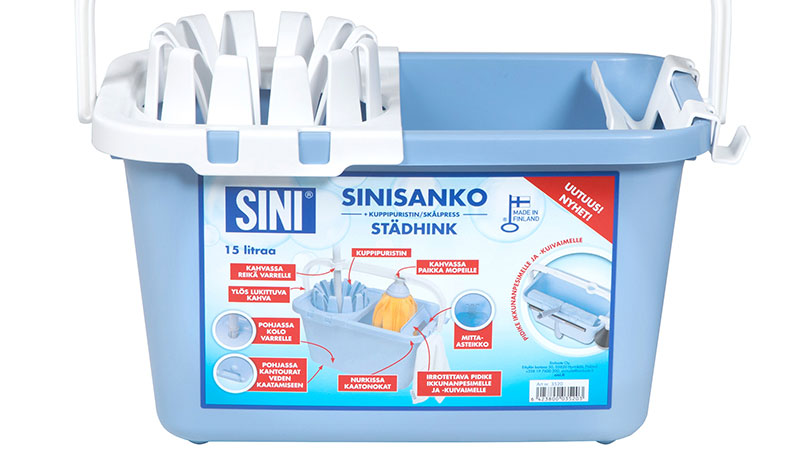
We are assisting Sinituote in the protection and enforcement of its trademarks and designs and in issues related to the management of its IP portfolio. Under the SINI brand, Sinituote markets and sells cleaning tools and products. SINI products are among the most popular ones in their product category in Finland. Kungs is the leading Nordic brand for automobile care. It includes winter products such as snow brushes and ice scrapers that are designed and tested to suit the extreme Finnish winter conditions. One of Sinituote’s most legendary products is the Sinipiika mop that was developed in the 1950s and is still in production today. In addition to SINI and Kungs, the Sinituote brands also include Savu, Lundia, Rörets and VS-Harja. The products are designed and mostly also manufactured in Finland. Sinituote has its own factory in the small town of Kokemäki in southwestern Finland. The group’s R&D focuses not only on the high quality of the products but also their ergonomics, environmental friendliness and design. Sinituote makes considerable investments in R&D and design and also actively protects and enforces its trademarks and designs.
Case published 22.1.2026

Tactic Games Oy – Protection and enforcement of trademarks
We represent the Tactic Games Oy, a leading international developer and manufacturer of board games, as lead counsel in its global brand protection, EU-wide customs enforcement and trademark disputes concerning the famous MÖLKKY trademark. MÖLKKY is an award-winning outdoor game marketed and sold in Europe, Australia, USA and Canada. The Tactic Games Oy has been the exclusive distributor of the MÖLKKY game since 2010, and it purchased the manufacturing and intellectual property rights for the game from Lahden Työn Paikka Oy in January 2017. Tactic’s product portfolio includes also other well-known games, such as Kimble, Alias and iKNOW.
Case published 15.1.2026

Alma Media – Brand Protection and Enforcement
We are advising Alma Media Corporation and its group companies in trade mark and other intellectual property right protection and infringement matters as well as in questions relating to brand portfolio management. We have also been involved in creating the brand strategy for the company and have handled marketing law and domain issues. Alma Media is a dynamic multi-channel media company with a strong capacity for renewal. The best-known brands of the company include Kauppalehti, Talouselämä, Affärsvärlden, Iltalehti, Aamulehti, Etuovi.com and Monster.
Case published 9.1.2026