The electricity price spikes at the start of the year were a stark reminder that the vulnerability of the energy system is not a theoretical risk. The windless cold weather had a significant impact on price levels, and this, paired with the global security situation, helped bring the question of security of supply back to the fore.
2.3.2026
Energy security is a matter of investment and competitiveness



Samuli Tarkiainen & Marius af Schultén
Related services
Energy security is not simply a question of price levels, however. It is a matter of investment, competitiveness and the overall functioning of the economy.
Russia’s war of aggression and the systematic destruction of energy infrastructure in Ukraine have shown that energy is a strategic instrument. More than 60 per cent of Ukraine’s electricity generation capacity has been destroyed during the war – and yet the system has held up, largely thanks to historical redundancy.
The lesson is clear: crises cannot be managed by reacting to them as they unfold. They are managed by preparing for them in advance.
The Finnish electricity system faces a structural challenge. As the share of renewable energy in electricity production increases, generation is increasingly concentrated in Ostrobothnia and Lapland. Electricity consumption, however, does not follow suit in a linear fashion, but will continue to be largely concentrated in southern Finland. This makes transmission networks a critical element of the entire system. The pressure to invest in transmission infrastructure is further intensified by the explosive growth in electricity storage projects as well as the broader electrification of industry and district heating networks. At the same time, the predictability of obtaining a grid connection is an essential prerequisite for attracting the industrial investments that Finland needs.
Resilience does not stem from a single solution. It requires a diverse electricity mix, robust transmission networks, storage capacity, and the protection of critical infrastructure against both physical and cyber threats.
Long-term infrastructure and energy investments require predictable regulation.
When a company makes an investment decision worth hundreds of millions or billions of euros, it needs to know what the rules are – and that those rules will not change midway.
Erratic regulatory changes translate directly into uncertainty in investment decisions. Energy security requires a regulatory framework that is investment-friendly, aligned with EU-level requirements, and flexible enough to adapt to changing circumstances.
Energy security is an integral part of the stability of Finland’s investment environment. Sufficient energy availability, functioning infrastructure and a clear set of rules form the foundation upon which industrial investments, data centre projects and green transition initiatives are built. Advancing these is in the interest of Finnish society as a whole.
Energy security is not an achieved state. It is an ongoing process that requires investment, cooperation and long-term commitment. The question is not whether we can hold our own against others, but whether we are building an operating environment in which growth and the green transition can be realised even in an uncertain world.


Latest insights
Article published 6.2.2026 – Tax & Structuring
Electricity sector Profit Tax Act in conflict with EU law – SAC denied leave to appeal

 Article published 16.12.2025 – Environment, Energy & Green Transition
Parliament approves substantial increases in tax on mined minerals
Article published 16.12.2025 – Environment, Energy & Green Transition
Parliament approves substantial increases in tax on mined minerals

 Article published 2.10.2025 – Environment, Energy & Green Transition
Fingrid extends restrictions on new energy storage facility connections in Southern Finland until 2029
Article published 2.10.2025 – Environment, Energy & Green Transition
Fingrid extends restrictions on new energy storage facility connections in Southern Finland until 2029
 Article published 25.6.2025 – Tax & Structuring
Administrative Court ruling: the Profit Tax Act targeting electricity companies is in conflict with EU law
Article published 25.6.2025 – Tax & Structuring
Administrative Court ruling: the Profit Tax Act targeting electricity companies is in conflict with EU law


Janne Juusela & Mikko Alakare
Tarja Pirinen, Mikko Alakare & Noora Ahonen
Konsta Peussa & Marius af Schultén
Janne Juusela, Mikko Alakare, Samuli Tarkiainen, Anette Laitinen, Noora Ahonen & Joakim Nivala
Latest references
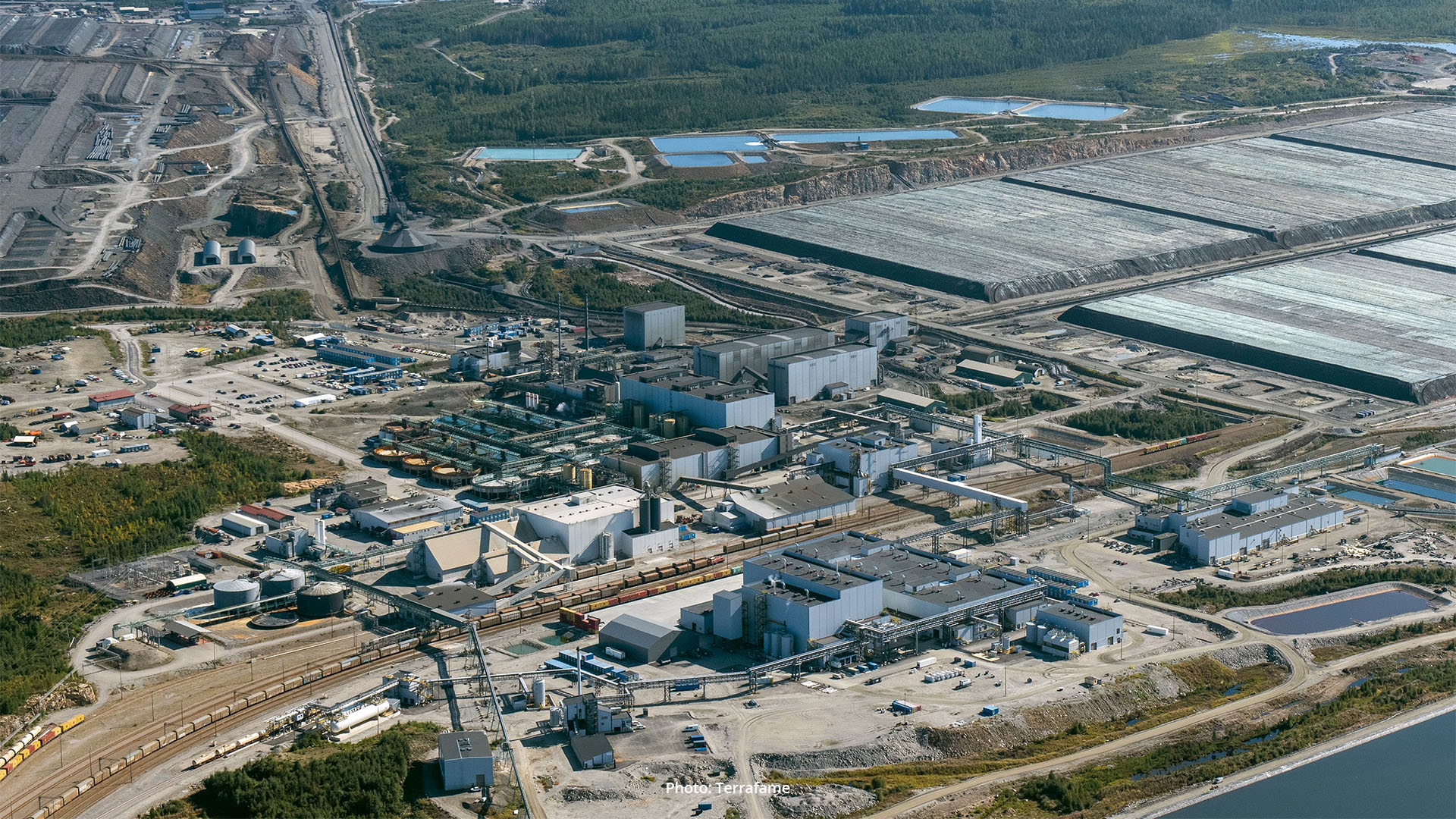
Terrafame – Environmental and water management permit processes concerning the company’s entire operations and the KL1 side rock area
Castrén & Snellman successfully assisted Terrafame Ltd in environmental and water management permit processes concerning the company’s entire operations and the KL1 side rock area, on which the Supreme Administrative Court issued its decision on 12 February 2026 (KHO 366/2026 and 367/2026). The changes made to the decisions of the Vaasa Administrative Court as a result of Terrafame’s appeals, enable the company to implement its new strategy and develop its operations as planned. The decisions of the Supreme Administrative Court brought the nearly ten-year-long permit process to a close.
Case published 20.2.2026

Brookfield – EUR 1 billion holdco financing for DayOne Data Centers
We advised a leading global investment firm Brookfield, alongside a global sovereign wealth investor, on the Finnish law aspects of a EUR 1 billion holdco financing for DayOne Data Centers, a Singapore-headquartered developer and operator of hyperscale data centres. Structured as a seven-year secured holdco financing facility of €500 million, expandable to €1 billion – and secured by DayOne’s Finland platform – the financing will support the rollout of hyperscale developments in Lahti and Kouvola, providing nearly 300MW of planned capacity across Finland. The proceeds will also support DayOne’s global expansion across the EU and APAC, with flexibility to allocate to other key growth markets as required.
Case published 29.1.2026

Rabobank – Financing arrangement for Olana Energy
Castrén & Snellman acted as legal advisor to Coöperatieve Rabobank U.A. in its capacity as sole lender and hedging bank providing senior financing to Olana Energy for a Battery Energy Storage Systems (BESS) portfolio in Finland. Our advice included preparing a legal due diligence report on the projects as well as advising on the negotiation of the various finance and project agreements. Olana Energy is a management-owned fast-growing independent power producer with an international pipeline of over 1 GW. The diversified portfolio of assets ranging from 5 to 30 MW reinforces the Finnish grid at a granular level.
Case published 18.11.2025

Ministry of the Environment – Report on the promotion of circular economy aspects in public procurement
Castrén & Snellman was commissioned by the Ministry of the Environment to carry out a study on how the Circular Economy Act could be used to promote circular economy aspects in public procurement. Our report provides valuable information to the working group tasked with preparing the new Circular Economy Act. The report includes an overview of relevant strategies, action programmes and policies, a look at relevant legislation and case law, an assessment of the current state of circular economy procurement and examples of integrating circular economy aspects into public procurement from around the world. We end the report with concrete conclusions and a proposal for a new circular economy provision with justification. The proposal aims to maximise the regulation’s effectiveness and minimise any adverse side effects. The final report is available on the Circular Economy Act project’s Gateway to Information (in Finnish). The study was carried out by Anna Kuusniemi-Laine, Sanna Aalto-Setälä, Lotta Huhtamäki, Marja Ollila, Laura Vuorinen, Paavo Heinonen and Anna Ylitalo.
Case published 11.11.2025