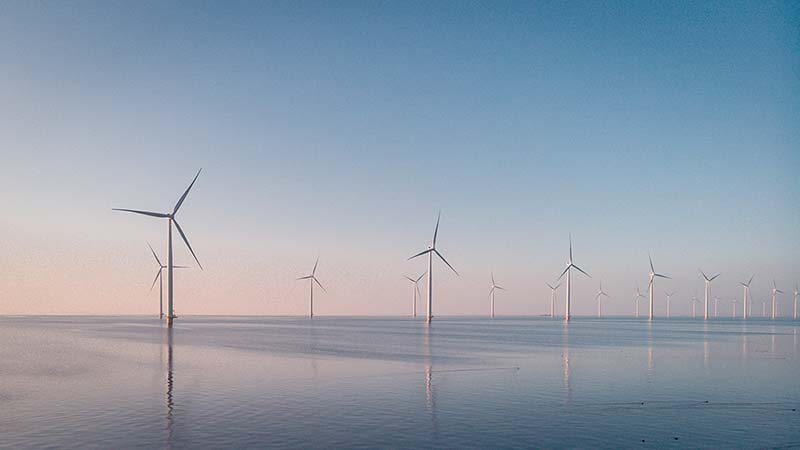
Onshore wind power has solidified its place as a form of electricity production in Finland. In contrast, there is currently only one offshore wind power plant operating in Finland, located in Tahkoluoto, Pori. The most significant obstacle to offshore wind power is generally considered to be weaker profitability than onshore wind power. There are plans in Finland to accelerate the construction of offshore wind farms, for example, by lowering the real estate tax rate.
23.9.2021
The Time for Offshore Wind Farms Approaching in Finland – Hundreds of Turbines in Development
Related services
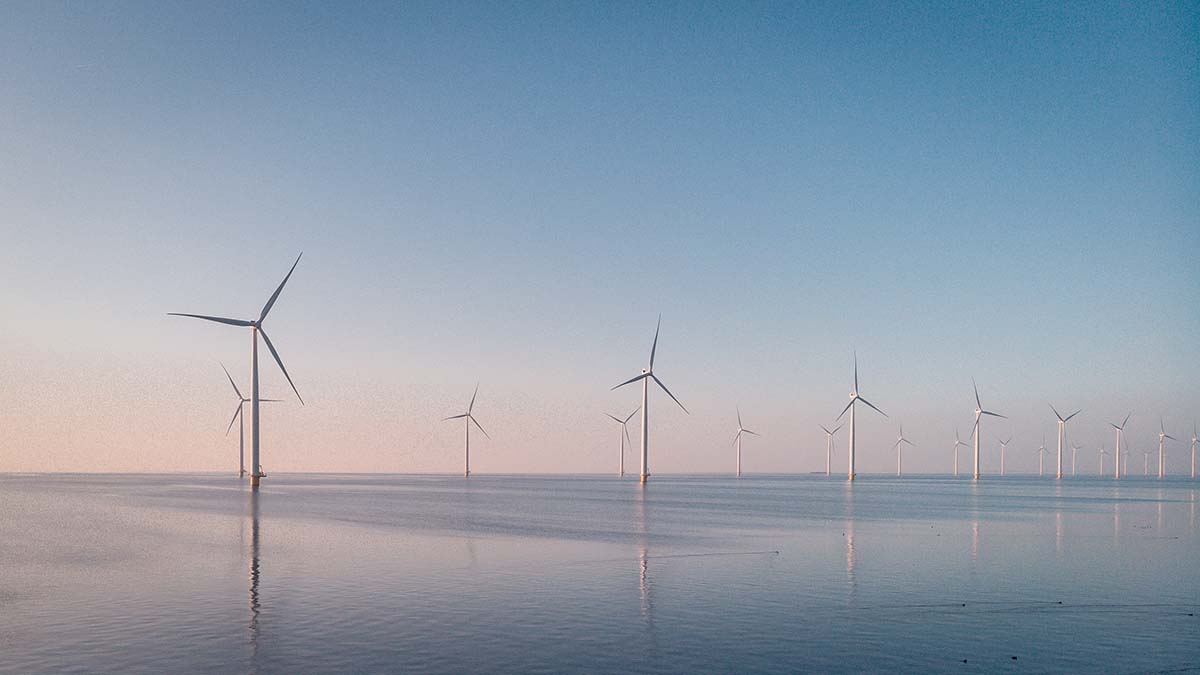
The political will to increase the adoption of offshore wind power is clearly present. In November 2020, the European Commission published the EU Strategy to harness the potential of offshore renewable energy for a climate neutral future. The goal of the strategy is to increase offshore wind power capacity to at least 60 gigawatts (GW) by 2030 and then to 300 GW by 2050. This would be a 25-fold increase of the current 12 GW capacity over the next 30 years.
Finland is also seeking to increase the adoption of offshore wind power. According to Prime Minister Sanna Marin’s government programme from 2019, the government will seek to improve the prerequisites for the construction of offshore wind farms and ultimately increase implementation in order to achieve the goal of nearly emission-free production of electricity by the end of the 2030s. According to Finland’s sustainable development programme published in 2021, a total of 161 million euros will be directed to investments in new energy technology, such as offshore wind power. The funds will come from the EU’s recovery package.
Lower Real Estate Tax Would Improve Profitability
One example of a concrete measure to promote offshore wind power is the planned reduction of the real estate tax for wind power. Currently, the replacement cost is 75% of the construction costs for both offshore wind farms and onshore wind farms. In practice, offshore wind farms nevertheless pay significantly more real estate tax than onshore ones. This is because offshore wind farms involve demanding foundation work and other construction costs, which means that the taxation values that form the basis for real estate tax are higher than for onshore wind farms.
The Ministry of Finance has prepared an amendment to the real estate taxation so that the replacement cost of offshore wind farms would include a smaller amount of the construction costs. The intent here is to place onshore and offshore wind power on equal footing with respect to real estate tax.
Significant Potential in the Baltic
The regional councils of Finland’s coastal municipalities approved the first maritime spatial plan for Finland’s territorial waters and exclusive economic zone at the end of 2020. Finland’s Maritime Spatial Plan 2030 is not legally binding, but does identify, among other things, potential areas for the development of offshore wind power. According to the plan, the Baltic Sea has significant potential with respect to offshore wind power. This potential is greater in Finland’s coastal regions compared to other Nordic countries. The Gulf of Bothnia, in particular, has been identified as being well suited to extensive offshore wind power construction.
There are numerous offshore wind power projects currently being developed in Finland. For example, a large-scale offshore wind farm is being planned in Åland, with LUT University studying options for moving forward. The government of Åland is planning as many as 500 offshore wind turbines with a total nominal capacity of 6 GW in an area of approximately 1,000 square kilometres. The planning and preparatory phase is estimated to continue into 2024.
Territorial Waters or Exclusive Economic Zone?
The authority processes required for offshore wind power projects, such as permitting processes, differ slightly from onshore wind power projects. For example, offshore wind farms require a water permit in accordance with the Water Act. The authority proceedings for offshore wind farms also differ according to whether the wind farm is going to be constructed in Finnish territorial waters, which are closer to the coast, or in the exclusive economic zone, which is farther out to sea.
In territorial waters, wind farms require, among other things, a zoning plan that allows wind farms as well as building permits, just like for onshore wind farms. In contrast, the exclusive economic zone is not subject to land use planning and no building permits are necessary for wind turbines in the exclusive economic zone. However, construction in the exclusive economic zone requires an exploitation right and consent to construct in the exclusive economic zone granted by the Finnish government and may also require, among other things, an environmental impact assessment process.
There is a very strong will in Finland to significantly increase the adoption of offshore wind power, and the practical implementation of projects requires versatile legal expertise. Castrén & Snellman has assisted clients in the permitting of major projects in the Finnish exclusive economic zone. Our firm also has extensive experience of wind power projects, most recently the development and sale of the Puskakorpi wind farm project.
Latest insights
Article published 24.9.2026 – Environment, Energy & Green Transition
Electricity Market Act: Proposed priority procedure to significantly change new electricity network connections in situations of scarce capacity




 Article published 8.5.2026 – Environment, Energy & Green Transition
Reform of Finland’s land use legislation – key takeaways for project developers
Article published 8.5.2026 – Environment, Energy & Green Transition
Reform of Finland’s land use legislation – key takeaways for project developers

 Article published 2.3.2026 – Environment, Energy & Green Transition
Energy security is a matter of investment and competitiveness
Article published 6.2.2026 – Tax & Structuring
Electricity sector Profit Tax Act in conflict with EU law – SAC denied leave to appeal
Article published 2.3.2026 – Environment, Energy & Green Transition
Energy security is a matter of investment and competitiveness
Article published 6.2.2026 – Tax & Structuring
Electricity sector Profit Tax Act in conflict with EU law – SAC denied leave to appeal


Marius af Schultén, Kanerva Sunila, Samuli Tarkiainen, Jonas Holm & Noora Ahonen
Tarja Pirinen, Marius af Schultén & Joel Aartolahti
Samuli Tarkiainen & Marius af Schultén
Janne Juusela & Mikko Alakare
Latest references

Neoen – Sale of data centre
We advised Neoen Renewables Finland Oy, part of the French Neoen Group, in its sale of a data centre project to a consortium consisting of international data centre developers and operators. This marked Neoen’s first data centre development project in Finland. Founded in 2008, Neoen is one of the world’s leading independent renewable energy producers. The company operates in 15 countries. It develops, finances, builds, owns, and operates solar power plants, wind farms, and battery storage systems. Neoen Group is owned by global alternative asset manager Brookfield Corporation.
Case published 17.9.2026
Lenders and Export Credit Agencies – EUR 514.4 million green project financing for Easpring Finland New Materials’ CAM plant
We acted as Finnish law legal adviser to the lenders and the export credit agencies in connection with the EUR 514.4 million green project financing for the development and construction of Easpring Finland New Materials Oy’s cathode active material (CAM) manufacturing plant in Kotka, Finland. The borrower, Easpring Finland New Materials Oy, is a joint venture owned by Beijing Easpring Material Technology, Finnish Minerals Group and LG Energy Solution. The financing was provided by six international commercial banks, with Société Générale acting as financial adviser and mandated lead arranger together with Natixis as co-mandated lead arranger, and DNB, ICBC, ING and Standard Chartered participating as lenders, with support from the export credit agencies Finnvera and Sinosure. The project represents a significant milestone for Finland and the European battery value chain by strengthening Europe’s domestic supply of cathode active materials, a key component in lithium-ion batteries for electric vehicles and energy storage applications. Once the first phase of the project is operational, the Kotka facility is expected to produce approximately 60,000 tonnes of cathode active material annually, making it one of the largest CAM production plants in Europe and supplying leading battery manufacturers across Europe.
Case published 21.7.2026
Delta Capacity – Acquisition of BESS Project
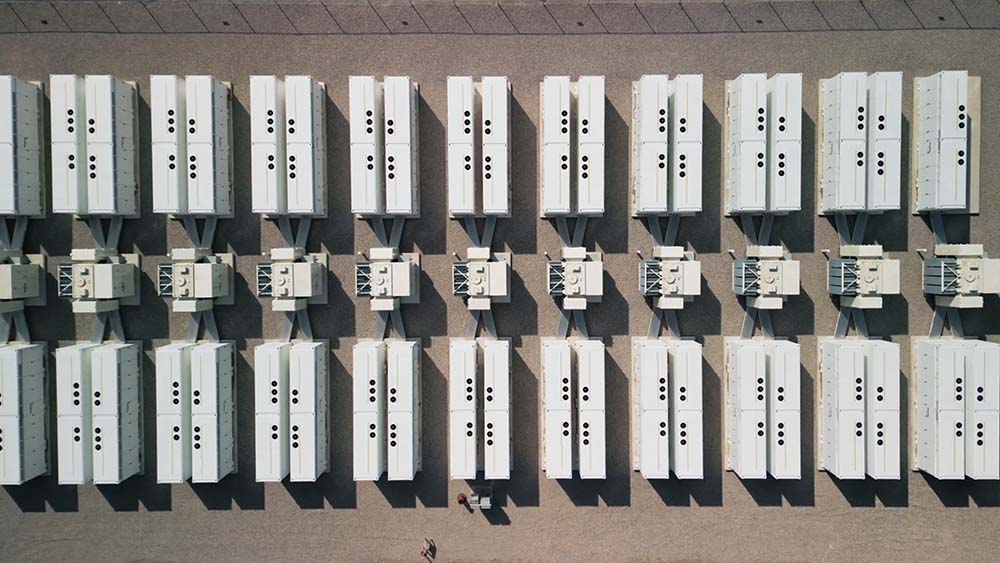
We acted as Finnish legal advisor to Delta Capacity in connection with its acquisition of the ready-to-build Karppio battery energy storage system (BESS) project from Helios Nordic Energy. The acquisition was made and the project will be implemented together with Strioga Family Foundation. The Karppio BESS project is located in Teuva, Finland, and has a capacity of 125 MW / 300 MWh. Delta Capacity will lead the remaining development of the project through to commissioning, planned for 2027, and will serve as long-term asset manager. Delta Capacity is a Swiss-based developer of utility scale battery storage systems. The acquisition adds to Delta Capacity’s growing Nordic portfolio.
Case published 20.7.2026

Winda Energy – Data centre project in Janakkala
We advise Winda Energy Oy on the development of its c. 100 MW data centre project in Janakkala, Finland, a landmark investment exceeding EUR 500 million. The project is being developed in collaboration with European investment company Gi21 Capital. Construction is scheduled to commence in 2027, with completion targeted for 2028. Winda Energy Oy is a renewable energy project development company established in 2011, with a portfolio of wind and solar power projects across Finland. The company manages projects throughout their full lifecycle, from initial planning and permitting to construction and completion.
Case published 8.7.2026