I’ve been asked multiple times whether a logo trade mark should be registered in black & white or colour. This question comes up, because trade mark owners want the best scope of protection they can get.
22.1.2019
What Is Happening to Black & White Trade Marks in Finland?


Sakari Salonen
Related services
Tags
To date, the answer to this question has been that when filing a Finnish trade mark, a black & white logo mark covers all colours. However, if you decide to file an EU trade mark, then you get what you have filed.
However, my answer is about to change, as the new Finnish Trademark Act is entering into force in the spring of 2019.
New Rule in Finland
Finnish trade mark law will undergo a major reform at the beginning of 2019. In this connection Finland has decided to abandon the ’black & white covers all’ approach and adopt the ’what you file for is what you get’ approach.
This means that existing Finnish black & white logo trade mark registrations or applications filed before the new Act enters into force will continue to cover all colour variations of the mark in question. However, new black & white logo trade marks filed after the new Act has entered into force will cover only the black and white version of the mark.
Use It or Lose It
One important rule to remember is that if you have not used your trade mark in its registered form within the last 5 years, third parties can invalidate your trade mark due to non-use.
If you file a black & white logo trade mark in Finland in the future, but you use your logo in some colour variation, you might eventually end up in a situation where your competitor can invalidate your trade mark registration as you have not used it in black & white form. To avoid this kind of situation, you should also protect your logo in colour in future.

Enforcement Problems
If you file a black & white logo mark after the new Act has entered into force and then try to enforce it against a competitor who is using a similar kind of mark in colour, you may have hard time proving that the colour mark infringes your black & white trade mark registration.
The problem is that use of a prominent colour logo may not be considered confusingly similar to an earlier black & white logo registration.
Conclusions
After the new Act has entered into force, you need to take the following things into account in Finland:

Latest insights
Article published 1.9.2026 – Intellectual Property
New marketing and consumer protection requirements call for action
 Article published 17.10.2025 – Intellectual Property
Is your IP safe? Eight real-life tips to avoid costly mistakes
Article published 17.10.2025 – Intellectual Property
Is your IP safe? Eight real-life tips to avoid costly mistakes

 Article published 13.3.2024 – Intellectual Property
Changed rules on green claims – does your marketing contain claims about environmental objectives or emissions compensation?
Article published 13.3.2024 – Intellectual Property
Changed rules on green claims – does your marketing contain claims about environmental objectives or emissions compensation?
 Article published 7.12.2023 – Data & Technology
Agreements define data sharing and re-use
Article published 7.12.2023 – Data & Technology
Agreements define data sharing and re-use
Hilma-Karoliina Rozell
Lauri Laatunen & Janne Koivisto
Hilma-Karoliina Rozell & Karla Kallela
Latest references

VR Group – Intellectual property matters
VR-Group Plc is a transport and logistics group owned by the Finnish State, operating passenger and freight rail transport in Finland with activities also in the Swedish market. VR Group provides passenger, logistics and maintenance services with over 160 years’ experience in developing responsible transport of the future. We advise VR Group in intellectual property matters as part of the company’s wider brand protection efforts. Our assignments have included advice on copyright, design rights and trademarks, focusing on the protection of the company’s visual identity – including its distinctive green colour – in connection with transport services as part of a comprehensive IP protection strategy. VR Group’s consistent brand building has also received recognition, including the Finland Chamber of Commerce’s Brand of the Year award in 2026. In the competition, brands were viewed comprehensively from various perspectives, including their story, strategic role, brand renewal ability and intellectual property protection. The jury found that VR had understood the importance of the protection of its brand as part of a comprehensive business strategy.
Case published 9.9.2026

Anora Group – Global Brand Portfolio Management and IP Enforcement
We are advising Anora Group in brand protection and intellectual property enforcement matters globally. Our IP team manages Anora Group’s global trademark and design portfolio, including registration, prosecution, opposition and enforcement. We also advise Anora Group in questions concerning marketing law, social media, domain names and cybersquatting. Anora Group Plc is a publicly listed company. It was born in 2021 through the merger of the Finnish Altia Oyj and the Norwegian Arcus ASA. Anora Group is a leading wine and spirits brand house in the Nordic Region and a global industry forerunner in sustainability. Anora Group has a large portfolio of iconic brands such as Koskenkorva, Linie, Larsen, Skagerrak, Chill Out, Ruby Zin, Wongraven, O.P. Anderson and Falling Feather. Its key brands are exported to over 30 markets globally.
Case published 28.1.2026
Sinituote – Protection and Enforcement of Brands and Designs
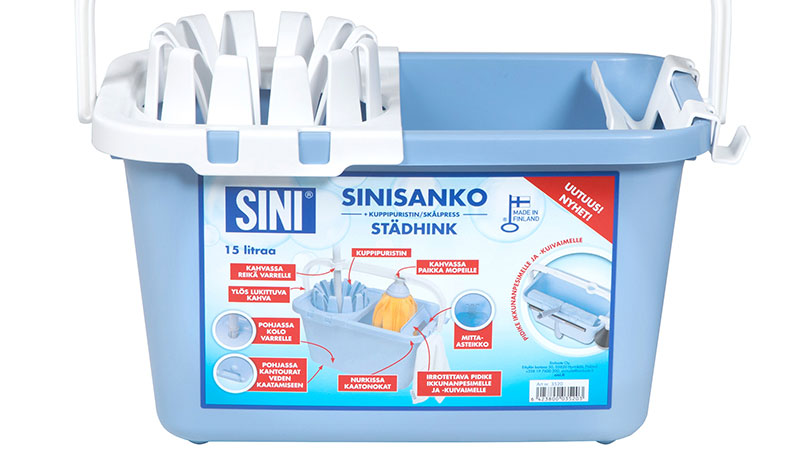
We are assisting Sinituote in the protection and enforcement of its trademarks and designs and in issues related to the management of its IP portfolio. Under the SINI brand, Sinituote markets and sells cleaning tools and products. SINI products are among the most popular ones in their product category in Finland. Kungs is the leading Nordic brand for automobile care. It includes winter products such as snow brushes and ice scrapers that are designed and tested to suit the extreme Finnish winter conditions. One of Sinituote’s most legendary products is the Sinipiika mop that was developed in the 1950s and is still in production today. In addition to SINI and Kungs, the Sinituote brands also include Savu, Lundia, Rörets and VS-Harja. The products are designed and mostly also manufactured in Finland. Sinituote has its own factory in the small town of Kokemäki in southwestern Finland. The group’s R&D focuses not only on the high quality of the products but also their ergonomics, environmental friendliness and design. Sinituote makes considerable investments in R&D and design and also actively protects and enforces its trademarks and designs.
Case published 22.1.2026

Tactic Games Oy – Protection and enforcement of trademarks
We represent the Tactic Games Oy, a leading international developer and manufacturer of board games, as lead counsel in its global brand protection, EU-wide customs enforcement and trademark disputes concerning the famous MÖLKKY trademark. MÖLKKY is an award-winning outdoor game marketed and sold in Europe, Australia, USA and Canada. The Tactic Games Oy has been the exclusive distributor of the MÖLKKY game since 2010, and it purchased the manufacturing and intellectual property rights for the game from Lahden Työn Paikka Oy in January 2017. Tactic’s product portfolio includes also other well-known games, such as Kimble, Alias and iKNOW.
Case published 15.1.2026