
Increase of Capital Income Tax Rate
The government has proposed to increase the higher tax rate for capital income from 33% to 34% (government proposal HE 31/2015). The lower tax rate for capital income will remain at the current 30%. The income threshold of the higher rate will also remain 30,000 euros.
Deducting Capital Losses from All Capital Income
The government is proposing that capital losses would in future be deductible not only from capital gains, but from all capital income. This amendment would only apply to the taxation of natural persons and estates of a deceased person.
Capital losses would primarily be deducted from capital gains. The portion not deducted from the gains for the tax year would be deducted from the amount of pure capital income before other deductions are made. If the losses cannot be deducted from other capital income, the undeducted portion would be used as the basis for confirming the capital losses for that tax year, and those confirmed losses would be deductible from capital gains and other capital income for the next five years. Losses would continue to be deducted in the order in which they were incurred. As is currently the case, no credit for deficit in capital income aimed at earned income would be granted based on the losses.
This amendment would apply to all losses incurred from the sale of property or assets in 2016 and thereafter. Losses incurred before 2016 would only be deductible from profit from the sale of property or assets during the same tax year and the five following years.
The deductible capital losses of other taxpayers, such as corporations, would continue to be deductible only from profit from the sale of property or assets during the same tax year and the five following years.
Active Repentance
The government has proposed that an act on the adjustment of tax based on voluntarily submitted information in 2016 be enacted (government proposal 32/2015). The act would contain provisions on ‘active repentance’ in taxation. This act would only be in force for 2016, and would allow a natural person or estate of a deceased person to avoid criminal sanctions for tax fraud provided that it voluntarily submits information to the Finnish Tax Administration on assets subject to income tax or inheritance and gift tax that it has not previously declared in its taxation.
In income taxation, the government is proposing that the amount of the tax increase be set at 3% of the added income, but no less than 300 euros. However, the tax increase would be 5% for the portion of added income exceeding 60,000 euros, and 7% for the portion exceeding 100,000 euros.
The inheritance and gift tax to be imposed on added income would be increased by 15%.
In income taxation, the interest on back tax provided for in the Act on Assessment Procedure would be imposed as a consequence for late payment. The penalty tax provided for in the Act on Penalty Tax and Interest for Late Payment would not be imposed.
Consequences of late payment would not be imposed in inheritance and gift taxation.
Increase to Real Estate Tax
Amendments would also be made to the Real Estate Tax Act, as the government is proposing increases to real estate tax rates (government proposal 26/2015). The following changes to real estate tax would apply as of the 2016 tax year:
In addition, as of the 2017 tax year, the range for the general real estate tax rate would increase from 0.80–1.55% to 0.86–1.80%, and the tax rate range for permanent dwellings would increase from 0.37–0.80% to 0.39–0.90%.
Dividends Paid to Corporations, Particularly in Cross-Border Situations
The government is proposing changes to the taxation of dividends paid to corporations (government proposal 59/2015). The changes are based on amendments to the EU Parent-Subsidiary Directive, with the purpose of preventing abuses of the tax benefits of dividend income, particularly in cross-border situations.
The government is proposing that the taxation of dividends paid to corporations be changed so that the dividend income received by corporations would in future be taxable income only to the extent that the payment can be deducted by the party making the payment. According to the proposal, a corporation receiving dividends would have to determine whether the party paying the dividends is entitled to deduct the payment in its taxation. For example, the recipient of dividends would have to determine what kind of investment, agreement or arrangement the dividend payment is based on, and how the payment is treated in the taxation of the party making the payment.
The government is also proposing that a provision prohibiting the abuse of general dividend tax benefits be added the act. The provision would be applied in the taxation of corporations to arrangements that are not genuine and that seek to unjustifiably benefit from the provisions concerning the tax-exempt status of dividends. The provision could also be applied to individual stages or parts of an arrangement. When the criteria for the application of the provisions would be met, dividends would be subject to tax.
These amendments would be first applied to taxation for the year 2016.
Latest news
Latest references

Neste – A EUR 250 million 10-year loan with NIB
We advised Neste as it signed a EUR 250 million 10-year loan with NIB. The loan will finance Neste’s investments related to research and development (R&D) in processing lower-quality feedstocks into high-quality renewable products; as well as the liquefied waste plastics (LWP) investment at Neste’s refinery in Porvoo, Finland. The R&D activities supported by the loan focus on the development of renewable solutions. These include, for example, expanding feedstock capabilities and technologies that enable the processing of new and lower-quality waste and residues into high-quality renewable end products. Part of the financing supports Neste’s liquefied waste plastics investment in Porvoo, related to upgrading low-quality plastic waste into high-quality feedstock at an industrial scale. The investment contributes to advancing circular economy solutions by enabling the use of hard-to-recycle plastic waste as a replacement for virgin fossil raw materials. The unit has an annual capacity to process up to 150,000 tonnes of liquefied waste plastic. Production ramp-up commenced in 2026.
Case published 19.8.2026
Aspo – Demerger and finance matters
We advised Aspo Plc, ESL Shipping Ltd and AtoBatC Shipping AB in relation to finance matters in connection with the demerger of Aspo, by which all the shares in ESL Shipping Ltd held by Aspo, together with the related assets and liabilities, will be transferred to a new independent company to be named ESL Shipping Group Plc. Aspo intends to apply for the shares of ESL Shipping Group to be admitted to trading on the regulated market of Nasdaq Helsinki. It is further intended that Aspo be renamed Telko Group Plc.
Case published 19.8.2026

Lenders and Export Credit Agencies – EUR 514.4 million green project financing for Easpring Finland New Materials’ CAM plant
We acted as Finnish law legal adviser to the lenders and the export credit agencies in connection with the EUR 514.4 million green project financing for the development and construction of Easpring Finland New Materials Oy’s cathode active material (CAM) manufacturing plant in Kotka, Finland. The borrower, Easpring Finland New Materials Oy, is a joint venture owned by Beijing Easpring Material Technology, Finnish Minerals Group and LG Energy Solution. The financing was provided by six international commercial banks, with Société Générale acting as financial adviser and mandated lead arranger together with Natixis as co-mandated lead arranger, and DNB, ICBC, ING and Standard Chartered participating as lenders, with support from the export credit agencies Finnvera and Sinosure. The project represents a significant milestone for Finland and the European battery value chain by strengthening Europe’s domestic supply of cathode active materials, a key component in lithium-ion batteries for electric vehicles and energy storage applications. Once the first phase of the project is operational, the Kotka facility is expected to produce approximately 60,000 tonnes of cathode active material annually, making it one of the largest CAM production plants in Europe and supplying leading battery manufacturers across Europe.
Case published 21.7.2026
Delta Capacity – Acquisition of BESS Project
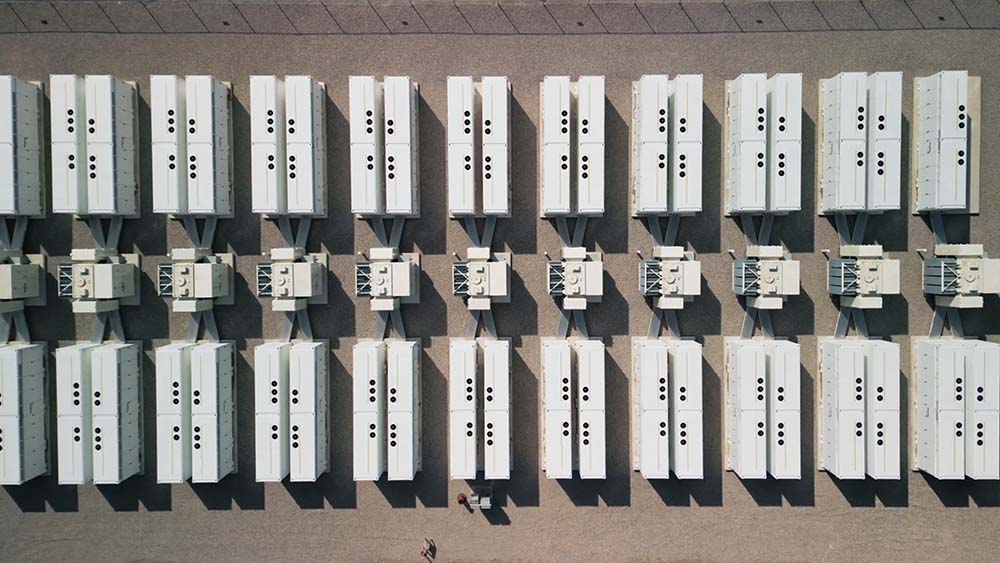
We acted as Finnish legal advisor to Delta Capacity in connection with its acquisition of the ready-to-build Karppio battery energy storage system (BESS) project from Helios Nordic Energy. The acquisition was made and the project will be implemented together with Strioga Family Foundation. The Karppio BESS project is located in Teuva, Finland, and has a capacity of 125 MW / 300 MWh. Delta Capacity will lead the remaining development of the project through to commissioning, planned for 2027, and will serve as long-term asset manager. Delta Capacity is a Swiss-based developer of utility scale battery storage systems. The acquisition adds to Delta Capacity’s growing Nordic portfolio.
Case published 20.7.2026