Digital transformation is one of the greatest drivers of our time, and due to the rapid pace of development, digitalisation has shifted from support functions to the core of the business. It has been estimated that the money spent on carrying out the transformation will double from the current two trillion to four trillion dollars by 2027.
5.9.2024
Technology acquisitions can boost companies’ growth – or cause them to fail



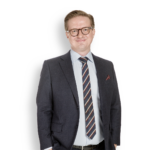
Topi Lusenius, Anders Forss & Kim Parviainen
Related services
This all materialises as technological transformation projects and system acquisitions. At best, successfully implemented transformation boosts new growth in the company while delays, dysfunctional software and overspending the budget can even jeopardise the business operations, particularly given that more and more customer interfaces are digital.
When companies undertake a transformation project, they should therefore reserve enough time and resources for it. External experts can also help evaluate the project and any related risks. If the project is a failure, related disputes can end up in court.
One factor that is essential for a well-implemented transformation project is a carefully drafted contract. A functioning contract provides flexibility and describes the targets, timetable and responsibilities as tangibly as possible for the duration of the project but also for the use of the new solution after the project. When the contract is in order, it is easy to monitor its execution. At best, the contract also provides a solid foundation if any disputes arise.
Advance planning is often a key to favourable results in disputes as well. When the contract is clear, it has been complied with on both sides and the organisation is prepared for any disputes, the project has better chances of success. In a best-case scenario, the transformation project is so skilfully planned, organised and led that it is not necessary to even consider leaning on these precautions.


Latest insights
Article published 2.2.2026 – Data & Technology
Avoid costly risks with well-drafted distribution agreements
 Article published 10.10.2024 – Data & Technology
New act on dual-use items entered into force in September – what companies need to know
Article published 10.10.2024 – Data & Technology
New act on dual-use items entered into force in September – what companies need to know
 Article published 6.5.2024 – Employment
Outsourcing company functions – four key points for success
Article published 6.5.2024 – Employment
Outsourcing company functions – four key points for success
 Article published 7.12.2023 – Data & Technology
Agreements define data sharing and re-use
Article published 7.12.2023 – Data & Technology
Agreements define data sharing and re-use
Topi Lusenius & Samuli Salminen
Kim Parviainen & Lauri Laatunen
Tomi Kemppainen, Kim Parviainen & Eija Warma-Lehtinen
Latest references

Downing – Acquisition of the entire share capital of Tornionlaakson Voima
We advised UK-based investment company Downing in its acquisition of the entire share capital of Tornionlaakson Voima Oy. Tornionlaakson Voima owns three hydropower plants in the Tengeliönjoki river system – the Portimokoski power plants in Ylitornio, the Jolmankoski power plants in Raanujärvi and the Kaaranneskoski power plants in Sirkkakoski. The power plants produce a total of approx. 45 gigawatt-hours of electricity per year. Tornionlaakson Voima’s daily operations will continue normally, and the transaction will not affect customers. The consummation of the transaction is subject to the approval of the Ministry of Economic Affairs and Employment. Downing has over 35 years’ experience in providing a wide range of investment solutions to the needs of institutional investors, advisers and retail investors. The company manages over £2 billion in assets in both the private and public markets and its current hydro power portfolio includes approx. 50 hydro power plants in the Nordics.
Case published 27.3.2026

LähiTapiola and OP Henkivakuutus – Successful representation of insurance companies in Supreme Administrative Court health data processing cases
We successfully represented insurance companies LähiTapiola and OP Henkivakuutus in two cases concerning an important point of principle: the right of insurance companies to process health data as part of the insurance application process. The Supreme Administrative Court handed down twin decisions ( one published as precedent ) addressing the matter in light of contrary DPA decisions. Under the Finnish Data Protection Act, insurance companies may, to simplify, process health data concerning “insured persons” (vakuutettu, försäkrad) to determine liability under the insurance. This rule constitutes an exception to Article 9 GDPR. At issue was whether the term “insured person” also covers people in the process of obtaining insurance coverage or only people who are already covered. In more practical terms: can an insurance company rely on the rule when considering whether/how to grant the insurance in the first place? The SAC answered in the affirmative and thus upheld the traditional industry approach over the DPA’s contrary view. The SAC noted that the Data Protection Act did not define the term “insured person” and thus looked at insurance legislation for guidance. As argued by the insurance companies, that legislation also uses the term in the context of describing the insured person’s pre-contractual informational obligations. Thus, and in view of the underlying purpose of the rule at issue, the SAC found that an “insured person” could be someone in the process of obtaining coverage, not just a person already covered. The outcome clarifies the scope of the local rule at the insurance application stage for the Finnish insurance industry.
Case published 22.1.2026

SuperOffice – Acquisition of Lyyti
We acted as Finnish counsel to SuperOffice AS, backed by Axcel, in its acquisition of Lyyti Oy from Finnish private equity firm Vaaka Partners and other sellers. Lyyti is a leading event management software company for physical, digital and hybrid events with a strong customer base in Finland, Sweden and France. SuperOffice is a leading provider of customer relationship management (CRM) software for small and medium-sized businesses across Northern Europe. Axcel is a Nordic private equity firm with a focus on technology, business services and industrials, healthcare, and consumer sectors.
Case published 9.12.2025

Lantmännen – Acquisition of Leipurin from Aspo
We advised Lantmännen ek för in its contemplated acquisition of Leipurin from Aspo Plc. Lantmännen is an agricultural cooperative and Northern Europe’s leader in agriculture, machinery, bioenergy and food products. Lantmännen is owned by 17,000 Swedish farmers and has 12,000 employees in over 20 countries. Leipurin is a leading Nordic supplier of bakery ingredients, equipment, and expert services to professional bakeries, confectioneries, and food manufacturers. The company operates across Finland, Sweden, and the Baltic countries with subsidiaries located in the aforementioned countries, providing comprehensive solutions to the baking industry. The closing of the transaction remains subject to regulatory approvals.
Case published 25.8.2025