In late February, we wrote an article about the unified patent system and its status. A lot has happened since then, and an update is in order to help keep track of recent developments.
31.8.2017
Are We Getting Closer to the Unified Patent Court and Unitary Patent?




Hanna Paloheimo, Piia Raappana & Sakari Salonen
Related services

Ratifications Going Forward
First, there has been some positive development in the ratification of the Unified Patent Court Agreement. For instance, Estonia ratified the agreement on 1 August 2017 and Lithuania a couple of days ago, on 24 August 2017. Overall, fourteen ratifications have taken place to date. From the high-profile patent countries, we are still missing ratifications from the UK and Germany, which are said to be required in order for the entire unitary patent system can come into force. Well, what is then happening in the UK and Germany in this respect?
Legislative Steps in the UK
Last autumn, the UK government confirmed it is continuing with preparations for ratification of the Unified Patent Court Agreement despite Brexit. This summer, secondary legislation in the form of an Order on Privileges and Immunities for the Unified Patent Court was laid in Westminster, and a similar Scottish Order will be laid in Holyrood. There are, however, still some doubts whether the UK will be able to participate in the unitary patent system after it leaves the EU, as the Unified Patent Court Agreement currently requires countries participating in the new patent system to be member states of the European Union.
Constitutional Issues in Germany
The movement towards the unitary patent system has not been trouble-free in Germany either. Earlier this year, Germany’s parliament dealt with the ratification of the Unified Patent Court Agreement and passed the legislation in that regard. Subsequently, some legal challenges arose. Due to a complaint where some constitutional issues were raised, Germany’s Federal Constitutional Court requested that the President temporarily refrain from signing the legislation until the court has decided the constitutional complaint. The court has stated that a specific date for deciding on the constitutional issues is not foreseeable. Therefore, Germany’s ratification of the Unified Patent Court Agreement remains uncertain. At least significant delays will most likely occur.
EPO’s Recently Published Unitary Patent Guide Summarises the Procedural Steps in order to Obtain, Maintain and Manage Unitary Patents
Another recent development worth mentioning is that the European Patent Office (EPO) published first edition of its unitary patent guide last week. As you may recall from our previous article, the unitary patent would be a new, supranational option to have unified patent protection in Europe, alongside the national routes and traditional European patents that need to be validated in each contracting state where patent protection is desired. The EPO’s 40-page long guide contains a compact summary of the procedural steps in order to obtain, maintain and manage unitary patents.
The purpose of the guide is to provide an outline of the procedure involved in obtaining a unitary patent from the EPO once it has granted a European patent on the basis of the provisions laid down in the European Patent Convention (EPC). The pre-grant procedure is same for the classical European patents as well as for the unitary patents. Once the EPO has granted the European patent, a centralised post-grant procedure for the registration of unitary effect will occur by the request of a patent proprietor.
So, Are We Getting Closer?
Yes, we are getting closer but we are not there yet. Nevertheless, it is positive that some development is continuously occurring. There are, however, many question marks still in the air. Little by little though, we are moving towards the unitary patent system, even though some delays are certainly at hand.
Due to the recent developments and the resulting delays, the UPC Preparatory Committee’s chairman Alexander Ramsay has outlined a new timetable. According to Ramsay, the period of provisional application could start during the autumn 2017, which would mean that the sunrise period for the opt-out procedure would start early 2018 followed by the entry into force of the Unified Patent Court Agreement and the Unified Patent Court becoming operational.



Latest news
Latest references

Efima – Sale of financial management services business
We advised Efima Oyj on the sale of its financial management services business to Rantalainen as part of its strategic focus on fully concentrating on the delivery of business applications as well as data and AI solutions. As a result of the transaction, customer contracts related to financial management services and 65 experts working in these services will transfer to Rantalainen. The transaction will be carried out as a transfer of business, and the experts will move to the new owner as existing employees. Efima is a Finnish digital company that supports the sustainable growth of large and mid-sized companies by streamlining their business processes and by creating competitive advantage through the innovative use of artificial intelligence and data. The company has nearly 200 experts based in Helsinki and Tampere.
Case published 12.6.2026

Ugly Duckling Ventures – EUR 6.5 million funding round of Skyfora
We advised lead investor Ugly Duckling Ventures on the EUR 6.5 million funding round of Skyfora. The round also included Eviny Ventures, LUMO Labs and EIC Fund, alongside non-dilutive funding from Business Finland. The investment will support the commercial scale-up of Skyfora’s weather intelligence solutions, the expansion of partnerships with telecom operators, forecasting providers and meteorological institutions, and the continued growth of the team. Skyfora is a Finnish company developing high-resolution weather data solutions using patented technology that extracts atmospheric data from GNSS receivers embedded in existing infrastructure, such as telecom networks. By unlocking previously untapped data sources, Skyfora enables the next generation of AI-driven weather forecasting and supports improved decision-making across weather-sensitive industries. Ugly Duckling Ventures is a Copenhagen-based venture capital firm focused on early-stage Nordic B2B technology companies, with an emphasis on medtech, resilience tech and business services.
Case published 10.6.2026

General Atlantic – ICEYE’s EUR 1 Billion Series F Funding Round
We advised General Atlantic as the lead investor on ICEYE’s EUR 1 billion series F funding round, valuing the company at over EUR 10 billion. ICEYE raised EUR 450 million (USD 520 million) in a primary Series F funding round led by General Atlantic. Additional investors included Solidium, Tesi, Varma, Ilmarinen, Lifeline Ventures, Nokia, Qatar Investment Authority (QIA) and TCV. Together with a secondary placement, the total fundraising exceeds EUR 1 billion. ICEYE is the world leader in sovereign intelligence from space, providing continuous monitoring capabilities to detect and respond to changes in any location on Earth. The company operates the world’s largest and most advanced Synthetic Aperture Radar satellite constellation. General Atlantic is a leading global investor with more than four and a half decades of experience providing capital and strategic support for over 885 companies throughout its history. As of March 31, 2026, General Atlantic manages approximately USD 126 billion in assets across its investment strategies. We advised General Atlantic on this transaction in collaboration with the international law firm Paul, Weiss, Rifkind, Wharton & Garrison.
Case published 9.6.2026
Oomi Solar – Sale of a Solar Power Plant and Battery Energy Storage Project
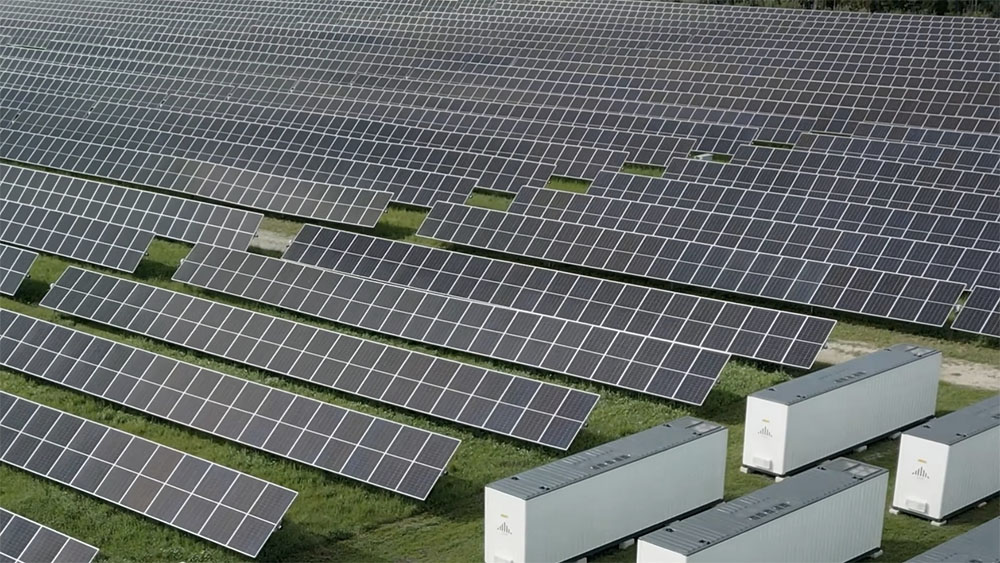
We advised Oomi Solar Oy on the sale of a solar power park and battery energy storage project to Tuulipolar Oy. The transaction concerned a 24 MWp solar power plant and a 36 MW / 70 MWh battery energy storage system (BESS) to be constructed in Tornio. Tuulipolar Oy will act as the owner and operator of the plant, while Oomi Solar Oy will be responsible for its design and construction. The project will form the world’s northernmost industrial hybrid power plant, contributing to Finland’s green energy transition by increasing renewable energy production and electricity storage capacity in Northern Finland. The hybrid solution enables optimization of production as well as active participation in electricity markets and reserve services, improving the project’s profitability and supporting the balance of the electricity system year-round. Electricity production from the hybrid plant is expected to begin in 2028. Oomi Solar Oy is a Finnish renewable energy expert with experience from nearly 200 MW of installed solar capacity. The company helps businesses and communities accelerate the green transition by offering comprehensive solutions, including solar power plants, energy storage systems, and related lifecycle services from project development to maintenance. Oomi Solar Oy employs more than 20 energy professionals and delivers solar power projects across Finland. The company’s vision is to be Finland’s most desired partner for solar energy and energy solutions.
Case published 5.6.2026