Justice Mikko Könkkölä, who is a former Court of Appeal president and a senior advisor at Castrén & Snellman, has been appointed to chair the committee appointed by the Ministry of Justice to prepare the reform of legislation concerning liability for damages of public sector entities. The project is part of the current Government Programme.
19.10.2021
Ministry of Justice Launches Legislative Reform of Liability for Damages of Public Sector Entities – Mikko Könkkölä to Chair Committee

Tags
The Tort Liability Act provides for the conditions under which the state, a municipality or other public entity can be held liable to compensate damage caused by its actions. The Tort Liability Act’s provisions concerning public entity liability have remained nearly unchanged for almost five decades.
‘A great deal has happened in the past 50 years. Finland joined the European Convention on Human Rights, enacted a new constitution, reformed provisions concerning authority jurisdiction and public administration, and privatised public duties. More importantly, the position and rights of individuals are in many ways even more pronounced than before. Now is a good time to take a look at how all this effects public entity liability’, says Senior Advisor Mikko Könkkölä.
In particular, the committee’s task is to determine whether to adopt provisions on compensating violations of fundamental or human rights by a public entity. The committee will also determine whether damage caused by a public entity giving erroneous advice or failing to give advice should be compensable more often than now.
‘A major question is whether the system of fundamental and human rights should be supplemented by national compensation provisions, and if so, how’, says Könkkölä.
The committee will also assess whether it is necessary to expand the state’s liability for coercive measures and the exercise of police powers. The liability for damages of public entities providing public services will also be part of the assessment.
The committee and monitoring group following its work have been appointed for a term ending at the end of May 2022.
Prior to joining Castrén & Snellman, Mikko Könkkölä worked for nearly two decades as a judge, a justice of the Supreme Court and as president of two courts of appeal. He has worked as a law drafter for over 25 years, including as the director of legislative affairs at the Ministry of Justice, being responsible for the drafting of laws in the field of private law.
Latest news
Latest references

Fortum – AI workshop
We delivered two AI workshops for Fortum Corporation’s Mergers and Acquisitions team, with both legal and business professionals participating. The sessions combined fundamental AI principles with custom use cases for commercially available AI tools tailored to Fortum’s needs. We also presented a bespoke solution merging AI with a script-based tool developed by our Legal Tech team, enabling a more automated way of working. Our experts conducted the training drawing on their legal background and leading experience in this emerging field of legal technology. Participants particularly appreciated the clarity and relevance of the implementations demonstrated. ‘C&S delivered an excellent, well-structured series of workshops, with directly applicable takeaways,’ says Sabina Hautaviita, Legal Counsel for M&A at Fortum.
Case published 9.3.2026

VR – Supreme Court decision clarifies working time practices
We successfully represented VR Group before the Supreme Court in a case concerning the meal break practice of commuter train drivers. On 6 February 2026, the Supreme Court ruled in VR’s favour (decision KKO:2026:12), confirming that VR had the right to amend the commuter train drivers’ meal break practice in 2021 by rendering the break unpaid in accordance with the applicable collective agreement. This decision clarifies the interpretation of collective agreements and employment legislation as well as the limits of the employer’s right to direct work. Over 250 commuter train drivers challenged the unpaid meal break practice which VR introduced in April 2021. Before the change, meal breaks had a long history of being paid. The change was based on the train drivers’ collective agreement, which allows for meal breaks to be organised either as paid or unpaid time. The Supreme Court ruled that the scheduling and managing of breaks falls within the core area of the employer’s right to direct work. This increases the threshold for an established practice becoming a binding condition for the parties. Merely following a practice consistently and over a long period of time does not make the practice binding; instead, the employer’s intent to commit to the practice must be clearly evident from the employer’s conduct or other circumstances. As both alternatives – paid and unpaid – for organising meal breaks had been retained in the collective agreement despite other amendments over the years, it could not be considered that VR had intended to commit to the paid break practice and waive its right to direct work as regards break scheduling. It was also significant that the employment contracts explicitly referred only to the collective agreement as regards working time. The Supreme Court deemed that the employees’ paid meal break was not an established term of employment and that VR was entitled to change the practice based on the collective agreement. The employer had the right, by virtue of its right to direct work, to unilaterally change the meal break practice by choosing to apply the other arrangement permitted by the collective agreement.
Case published 3.3.2026

CapMan Growth – Investment in Kuntokeskus Liikku
We are assisting CapMan Growth in its significant investment in Kuntokeskus Liikku, a Finnish gym chain known for its high-quality self-service facilities and excellent value for money. The investment will further strengthen Liikku’s position as a market leader and support the continued execution of its growth strategy. Liikku is one of Finland’s leading fitness chains, with more than 70 locations across the country serving nearly 90,000 members. The company’s concept is to offer high-quality self-service gyms at an exceptionally competitive price point which, combined with strong operational efficiency, provides a solid foundation for profitable growth. The company’s main shareholder is COR Group, a long-time partner of CapMan Growth, and a Finnish health and wellness conglomerate known for active ownership and long-term value creation. CapMan Growth is a leading Finnish growth investor that makes significant investments in entrepreneur-led growth companies with a turnover of €10–200 million. CapMan Growth is part of CapMan, which is a leading Nordic private equity investor engaged in active value creation work. CapMan has been listed on the Helsinki Stock Exchange since 2001.
Case published 27.2.2026
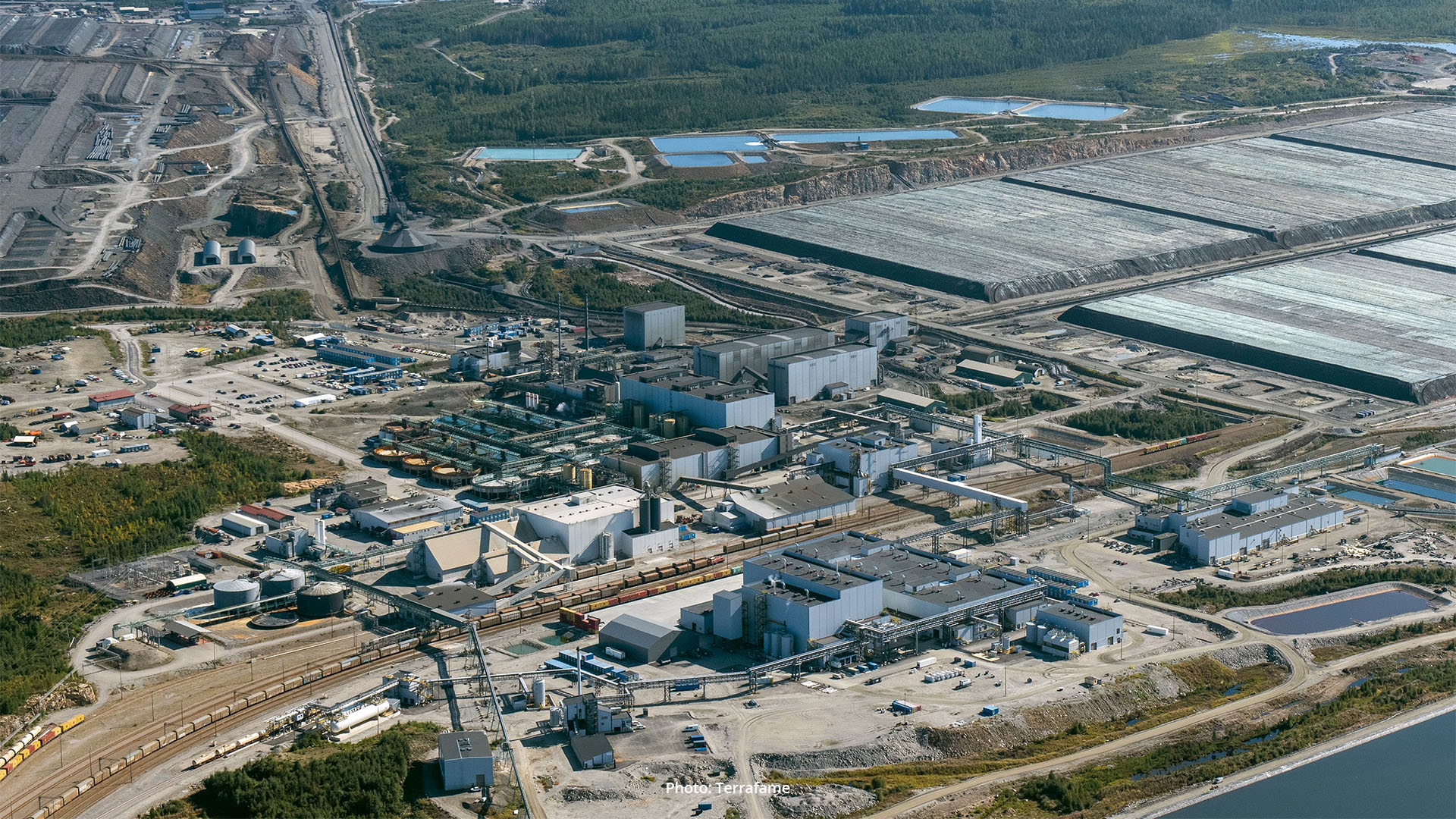
Terrafame – Environmental and water management permit processes concerning the company’s entire operations and the KL1 side rock area
Castrén & Snellman successfully assisted Terrafame Ltd in environmental and water management permit processes concerning the company’s entire operations and the KL1 side rock area, on which the Supreme Administrative Court issued its decision on 12 February 2026 (KHO 366/2026 and 367/2026). The changes made to the decisions of the Vaasa Administrative Court as a result of Terrafame’s appeals, enable the company to implement its new strategy and develop its operations as planned. The decisions of the Supreme Administrative Court brought the nearly ten-year-long permit process to a close.
Case published 20.2.2026